Facing scorching heat in a campervan: survival strategies
Italian summers are getting hotter, and heatwaves are becoming a regular occurrence for campervan travelers. The feeling of being in a greenhouse on wheels can turn a dream vacation into an unpleasant experience. But with a few adjustments, you can mitigate the effects of the heat.
First and foremost, the choice of parking spot is crucial. Prioritize shaded areas, preferably under tall trees. Parking spots near lakes or the sea can offer slight relief thanks to the breeze, but beware of humidity, which, combined with heat, can worsen the stuffy feeling. If you're in an urban area, look for parking spots not exposed to direct sunlight during the hottest hours, perhaps near tall buildings that can provide some shade.
Ventilation is your best ally. Keep windows and roof vents open, ideally on opposite sides of the vehicle, to create airflow. Using low-power fans, perhaps battery-operated or solar-powered, can help move the air inside. Consider installing specific roof vent fans that extract hot air from the interior. Blackout curtains and external sunshades are also essential to block solar rays before they hit the glass.
To learn more about shading and protection techniques, read our article Shade and sun protection in a campervan: awnings, gazebos, and clothing.
Regarding hydration and nutrition, drink plenty of water, even if you don't feel thirsty. Avoid heavy meals and opt for fresh fruits and vegetables. Use the air conditioner, if available, sparingly to avoid draining the battery or engine too much, and always in combination with good natural ventilation. Set temperatures not too far below the outside temperature to avoid harmful thermal shock.
Managing storms in a campervan: safety first
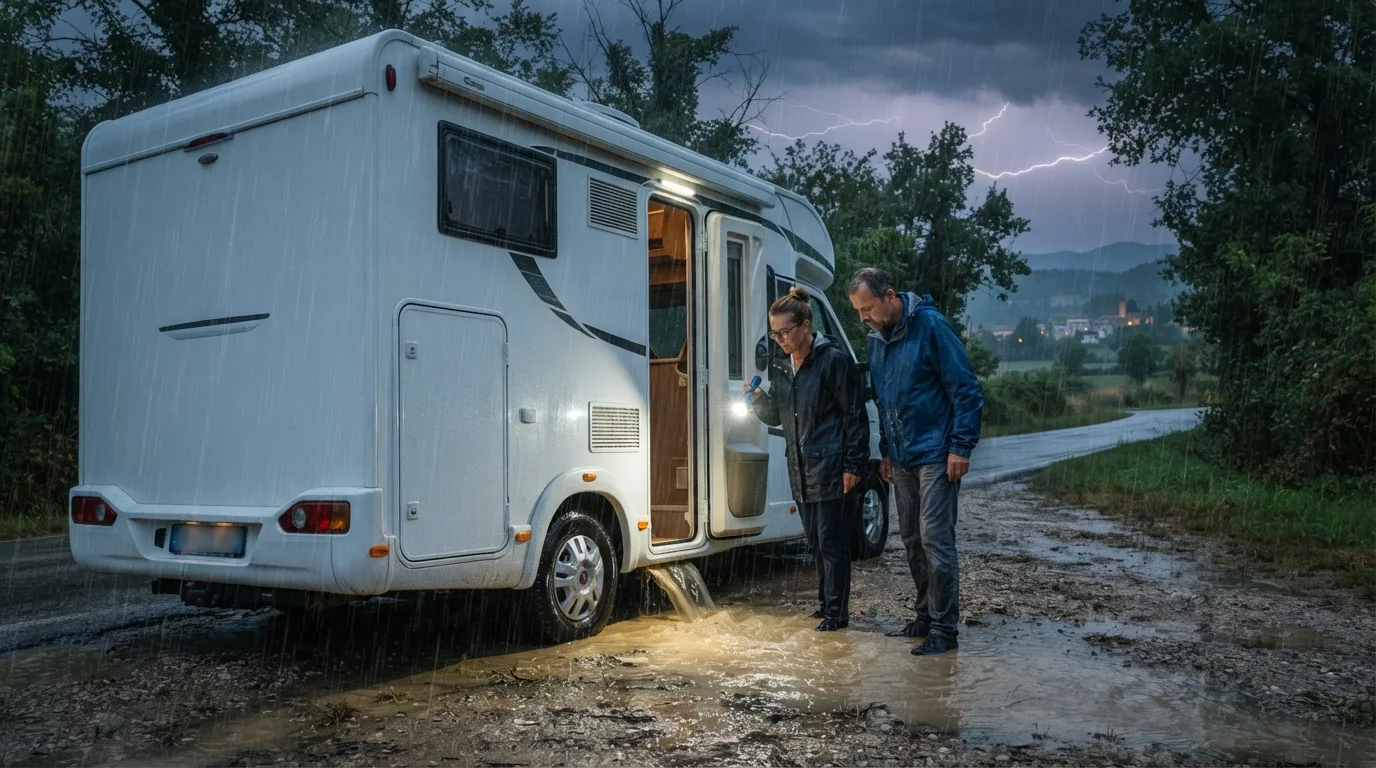
Summer storms, especially in the mountains or areas prone to downpours, can be sudden and violent. Strong winds, hail, and lightning require attention and readiness.
If you are traveling, the first rule is to avoid driving during an intense storm. Find a safe place to stop. Service areas on highways are a good option, but equipped rest stops or safe lay-bys, far from isolated trees or precarious structures, can also work. If you are camping, ensure your pitch is well-drained and not in a low-lying area that could flood. Close all windows and roof vents tightly to prevent water ingress.
Securing the vehicle properly is essential if strong winds are expected. Make sure the external awning, if deployed, is well-fastened or, even better, retract it to prevent wind damage. Check that there are no external objects that could fly away and cause damage.
What to do in case of lightning?
A campervan, being a metal structure, can attract lightning. During a thunderstorm with lightning, it is advisable to avoid touching metal parts inside and outside the vehicle. Disconnect any external antennas. If you are in an open area, move away from the vehicle and seek safe shelter, such as a masonry building or a car. Inside the campervan, minimize the use of electrical equipment connected to the external grid or using antennas.
Weather monitoring and preparation: the key to traveling with peace of mind
Prevention is the best strategy. Before departing and during the trip, it is essential to constantly monitor weather forecasts. Use dedicated apps, reliable weather websites, or regional bulletins. Pay close attention to weather alerts, especially red or orange ones.
Preparing the vehicle plays a crucial role. Ensure your campervan is in perfect condition, with good tires, efficient brakes, and working windshield wipers. Check the proper functioning of the electrical system and the exhaust system.
Always keep an adequate safety kit handy: a complete first-aid kit, a fire extinguisher, a tire repair kit, a flashlight, thermal blankets, and a supply of non-perishable water and food. In case of emergency, having these items can make a difference.
For a complete guide to a travel first-aid kit, consult The travel first-aid kit for camper families: your complete guide.
When caution is never too much: regulations and practical advice
In Italy, weather alerts are managed by Civil Protection and regional authorities. It is useful to consult official websites for updated information on the local situation. For example, the website of the Department of Civil Protection (www.protezionecivile.it) provides bulletins and alerts.
In case of a weather alert, it is always advisable to stay informed through local news or official communications. If you are in particularly high-risk areas (e.g., areas prone to landslides, floods, or near watercourses), consider moving to a safer area, following the instructions of law enforcement or Civil Protection.
Safety on the road is paramount. Remember that driving in adverse weather conditions exponentially increases risks. Never underestimate the power of nature. A day's delay or a forced stop in a safe place is always preferable to an accident.
To learn more about general campervan safety, check out our Safety category.
mitcamper tip
Traveling by campervan is also an opportunity to meet people with similar passions. Participating in rallies or parking in areas frequented by other campervanners can offer mutual support, exchanges of valuable information, and, why not, new friendships. Mitcamper is the ideal place to connect with people who share your lifestyle and your road adventures.