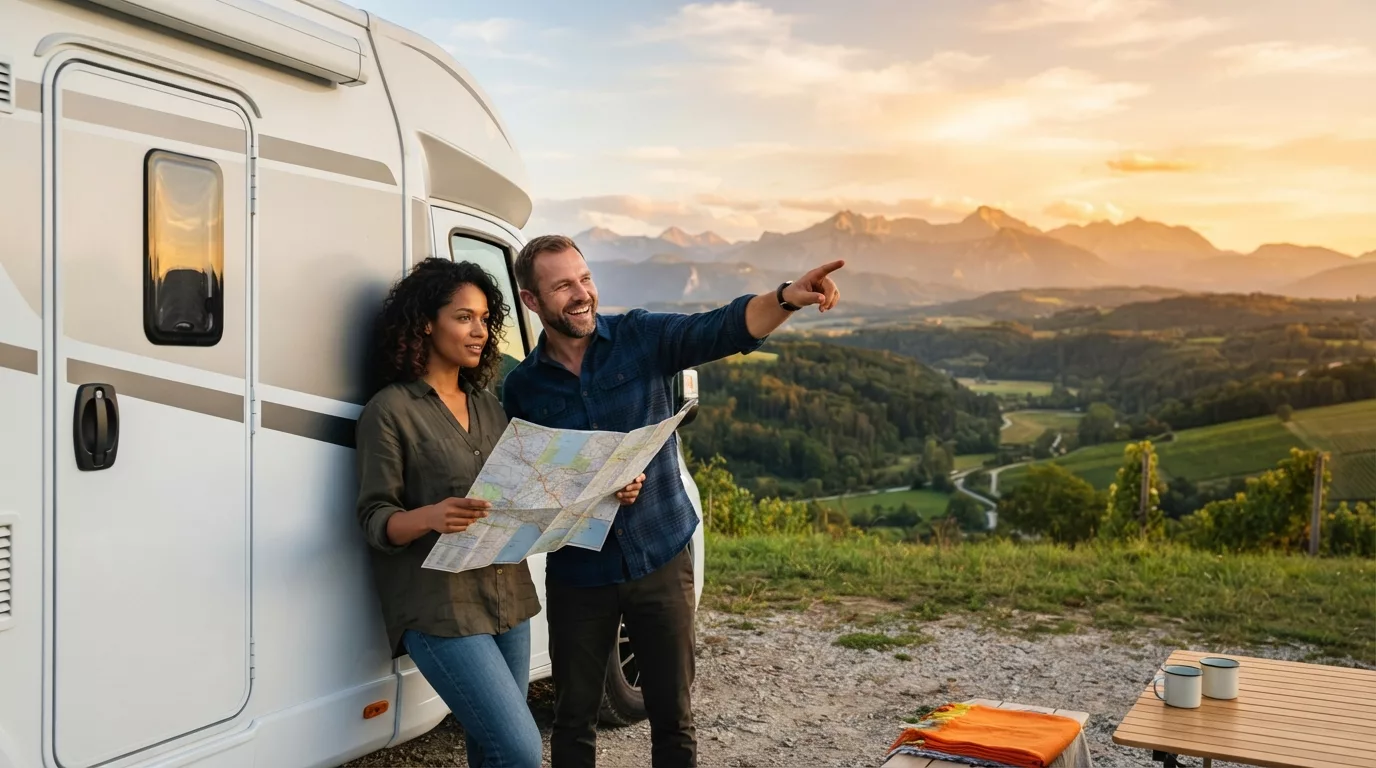
The idea of embarking on a four-wheeled adventure, with your home always at your disposal, fascinates more and more people. Whether you're a couple seeking freedom, friends ready to explore new horizons, or a family eager to create lasting memories, a camper offers a unique travel experience. However, those accustomed to getting around by car might underestimate the substantial differences involved in driving a larger vehicle. Driving a long camper is not simply an extension of driving a car; it requires a different approach, greater attention, and specific preparation to ensure your safety and that of others.
This article is designed for you, camper enthusiasts of all kinds, to help you fully understand the peculiarities of this experience, providing practical advice that will make your journeys smoother and more serene. Forget the rush of a car: this is about a different pace, spatial awareness, and deep respect for the road and other users.
Dimensions matter: spatial perception and bulk
The most obvious difference between a car and a long camper lies in its dimensions. A camper, by its nature, is taller, wider, and longer than an average car. This reality has a direct impact on spatial perception and maneuverability.
Height: the invisible enemy
Height is perhaps the most critical aspect to consider, especially in urban areas or places with infrastructure not always suited for larger vehicles. Low bridges, tunnels, tree branches, and even road signs can become insidious obstacles. Before embarking on a route, it is essential to check the maximum height allowed for your vehicle. Many campers have height indications in their registration documents or directly on the bodywork. Never rely on approximate estimates; a miscalculation can lead to significant damage to the vehicle and, worse, jeopardize safety.
Practical tip: before tackling unfamiliar routes, consult specific camper maps or dedicated apps that indicate any height restrictions. When in doubt, it's always better to take a longer route or ask for information.
Width and length: the art of positioning
The width of a camper affects its ability to pass through narrow streets, historic centers, or parking areas. The length, on the other hand, determines the turning radius and the distance needed for maneuvers like overtaking or turning. Learning to accurately assess the bulk of your vehicle is a skill acquired with experience, but there are some tips that can facilitate the process.
- Lane positioning: a camper takes up more space than a lane. It's important to learn to position yourself correctly, avoiding touching the demarcation lines and maintaining an adequate safety distance from other vehicles.
- Overtaking: overtaking with a camper requires meticulous planning. Carefully assess the distance, the speed of the vehicle to be overtaken, and the presence of oncoming traffic. Remember that a camper's braking distance is longer than that of a car.
- Stops and parking: finding a place to stop or park a camper can be a challenge. Look for dedicated areas, large parking lots, or, if necessary, ask for permission. Avoid blocking traffic or occupying unauthorized spaces.
Driving on the move: braking, acceleration, and visibility
The weight and dimensions of a camper radically alter driving dynamics. Understanding these differences is crucial for safe and comfortable driving.
Braking: a longer process
One of the most important factors to internalize is that braking a camper requires significantly more space and time than a car. The high weight of the vehicle, especially when loaded, increases inertia. It is therefore essential to anticipate braking, maintaining a greater safety distance from the vehicle ahead. Avoid sudden braking, which can destabilize the vehicle and jeopardize safety.
Practical tip: practice in safe, low-traffic areas to get familiar with your camper's braking distance. Learn to use engine braking on descents, reducing the load on the service brakes.
Acceleration and maneuverability
A camper's acceleration, especially for those with less powerful engines, will naturally be slower than a car's. This is not a flaw, but a characteristic to manage. Be patient when overtaking and restarting at traffic lights. Maneuverability, as mentioned, is influenced by size. Tight turns, roundabouts, and maneuvers in confined spaces require more attention and optimization of the turning radius.
Visibility: broadening your view
The raised driving position in a camper offers good forward visibility, but rear and side views can be limited by the mirrors and the vehicle's structure. Many campers are equipped with rear cameras, a valuable aid for maneuvers. However, it's important not to rely solely on these technologies.
Practical tip: get used to using your mirrors effectively, regularly checking for obstacles or vehicles in blind spots. When parking or maneuvering, have a passenger guide you with precise instructions.
Safety on the road: a priority aspect
Safety is a fundamental pillar of camper travel. Beyond driving, there are other aspects to consider to ensure a serene and protected journey.
Loading and weight distribution
Properly distributed load is essential for the camper's stability. Weight should be concentrated in the central part of the vehicle, avoiding excessive overloading of the axles. Heavy items should be placed as low as possible. An unbalanced load can compromise road holding and increase the risk of skidding, especially in curves or in case of crosswinds.
Practical tip: before setting off, take the time to load the camper in an orderly and secure manner. Use straps and fastening systems to prevent items from shifting while driving.
Vehicle maintenance
A camper, like any other vehicle, requires regular maintenance. Check tires, brakes, lights, fluid levels, and all safety systems before each trip. A thorough inspection before long journeys is always recommended.
Road and weather conditions
Driving a camper in adverse road conditions (heavy rain, snow, ice, unpaved roads) or with strong crosswinds requires even greater attention. Slow down, increase your safety distance, and if conditions are too prohibitive, consider stopping and waiting for them to improve. Crosswinds, in particular, can be very insidious for taller and wider vehicles.
Tips for more relaxed driving
Approaching the drive of a long camper with serenity is possible by adopting a few strategies:
- Route planning: study the route in advance, taking into account your vehicle's dimensions. Avoid overly narrow roads or those with access restrictions if you are unsure.
- Calm pace: don't rush. The beauty of camper travel is enjoying the journey, not just the destination at all costs. A slower pace will allow you to appreciate the scenery and react more calmly to unexpected situations.
- Frequent breaks: driving a larger vehicle can be more tiring. Take regular breaks to stretch your legs and rest.
- Training and practice: if you are a novice, consider taking a specific camper driving course. Consistent practice, safely, is the best way to gain confidence.
The charm of life on the road: an experience to live
Driving a long camper is an experience that transforms the way you travel. It requires patience, attention, and a good dose of awareness, but the rewards are immense: the freedom to explore, the convenience of having your home always with you, and the opportunity to live unforgettable adventures. Understanding and respecting the specifics of driving a camper is the first step to fully enjoying this extraordinary opportunity. From safety to space management, every aspect contributes to making your trip a success.
Camper travel is an art, a way of life learned on the road. Don't be discouraged by the first challenges; every mile traveled will make you more experienced and confident. Remember that the camper community is often very close-knit and willing to share advice and experiences. Don't hesitate to ask for help or exchange opinions.
mitcamper tip: the beauty of camper travel is also meeting new people and sharing passions. On mitcamper, you can discover other travelers with whom to exchange practical advice, itineraries, or simply have a chat. Finding people compatible with your interests and travel style can further enrich your on-the-road experience.