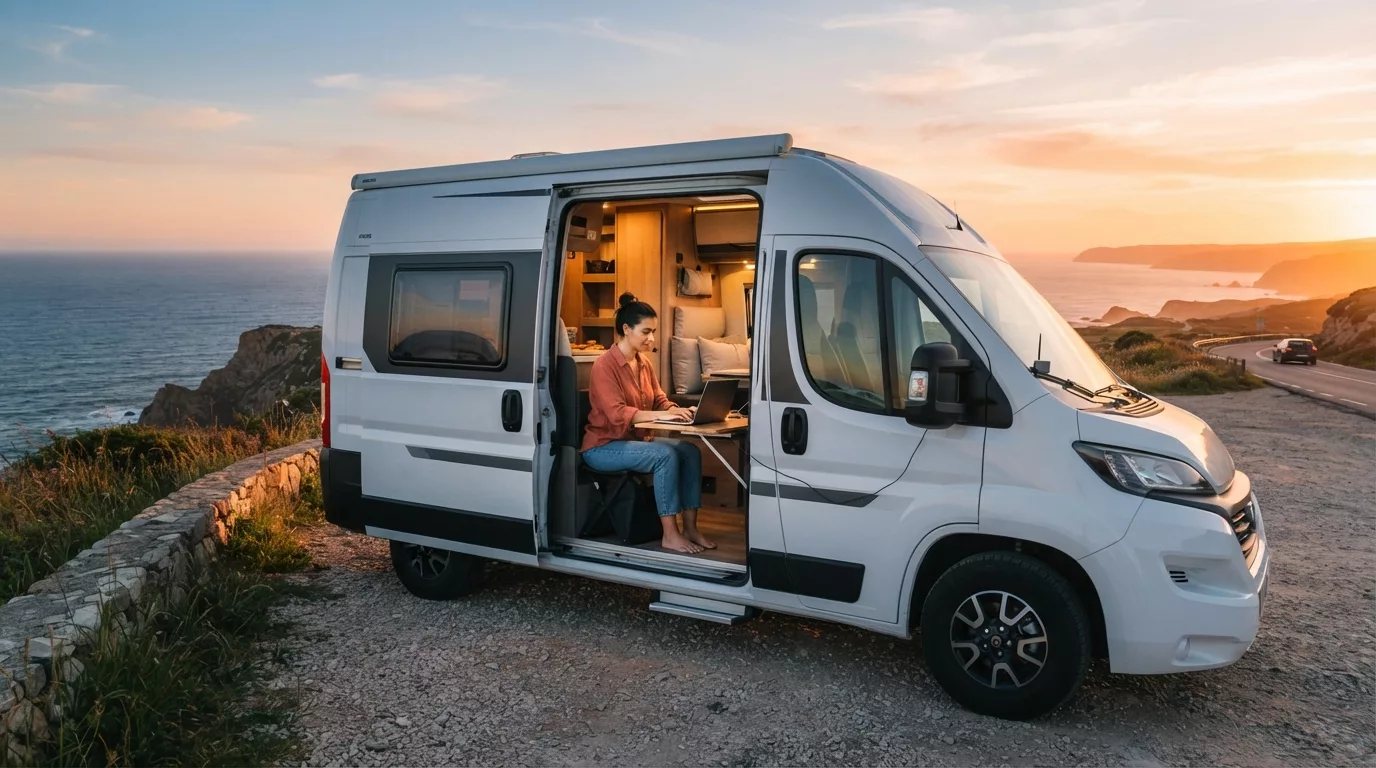
How do you handle: Smart working in a camper: the new frontier of travel?
The world of work is constantly evolving, and camper life is proving to be an increasingly compatible choice with the demands of smart working. Whether you're a family of digital nomads, a couple seeking adventure, or a solo professional, the ability to work from anywhere, with the freedom to move, is an irresistible draw. However, to turn this dream into reality, it's crucial to solve one of the most common challenges: ensuring a stable and fast Wi-Fi and internet connection.
Traveling by camper no longer means disconnecting from the professional world. In fact, with the right technologies, your vehicle becomes an efficient and flexible mobile office. But what are the most effective solutions for those who, like you camper enthusiasts, travel frequently and need a reliable connection for video conferences, uploading large files, and online research?
How do you handle: The challenges of connectivity in a camper?
Life on the road offers breathtaking scenery and freedom, but it also presents unique obstacles for those who need to work. Mobile network coverage can be patchy, especially in rural or mountainous areas. Wi-Fi connections offered by campsites or service areas (like German Stellplatz, French aire de service / aire camping-car, Spanish area de servicio, or Italian aree attrezzate) are often overloaded, slow, or require payment. Furthermore, constant mobility requires solutions that adapt to different scenarios, from parking in the city to stopping in the middle of nature.
For a professional on the move, an unstable connection can mean missing an important appointment, slowing down your work, or failing to meet deadlines. This is where technology plays a crucial role, offering tools to overcome these limitations and fully enjoy the mitcamper lifestyle.
Solutions for camper Wi-Fi: from mobile to satellite
Addressing the connectivity issue requires a multi-faceted approach. There isn't a single solution that fits everyone, but a combination of tools can ensure maximum coverage and reliability.
1. The power of your smartphone: hotspot and data SIM
The most immediate and often most economical solution is to leverage your smartphone's connection. Almost all modern phones allow you to create a personal Wi-Fi hotspot, turning your device into a portable router. This is ideal for short work sessions or when coverage is good.
- Pros: Easy to use, low cost (if you already have a generous data plan), always at hand.
- Cons: Rapidly drains phone battery and mobile data, coverage depends on the mobile operator's network, can overheat with prolonged use.
For those who need more data or want to separate work traffic from personal use, purchasing a second data SIM dedicated to the camper is recommended. Many operators offer advantageous data plans, including European roaming. Consider offers specifically for frequent travelers.
2. Indoor or outdoor 4G/5G Router
For a more stable and dedicated solution, a 4G or 5G router is an excellent investment. These devices use a data SIM to create an internal Wi-Fi network within the camper, to which multiple devices (laptops, tablets, smartphones) can be connected simultaneously. There are indoor models, to be placed strategically, and outdoor models, which offer better reception but require more complex installation.
- Pros: More stable and powerful connection than a smartphone hotspot, allows connecting multiple devices, some models are designed to withstand the elements and improve mobile signal reception.
- Cons: Initial cost of the device, requires a dedicated data SIM, installation of some external models may require technical expertise.
When choosing a router, check compatibility with the frequency bands used by various operators in the European countries you plan to visit. A good 4G+ or 5G router can make a huge difference in speed and stability.
3. External Wi-Fi antennas and signal boosters
If your priority is to latch onto public Wi-Fi networks (e.g., those at a campsite or service area) and amplify their signal, an external antenna can be the solution. These devices, installed on the camper's roof, capture the available Wi-Fi signal nearby and redirect it inside the vehicle, making it usable by all your connected devices via an internal router.
- Pros: Useful for leveraging existing Wi-Fi networks even at a distance, can significantly improve reception in areas with weak signals.
- Cons: Only works if there is a Wi-Fi network available nearby, does not create a connection from scratch, requires roof installation.
It's important to distinguish between Wi-Fi signal boosters (which capture existing Wi-Fi networks) and 4G/5G antennas (which capture the mobile signal). For smart working, the ideal is often to combine an external 4G/5G antenna with an indoor router.
4. Satellite connection: the ultimate (and expensive) solution
For those traveling in remote areas where mobile coverage is non-existent or extremely limited, satellite connectivity is the most reliable solution. There are kits consisting of a dish and modem that connect to a satellite network, offering internet access almost anywhere.
- Pros: Global coverage, ideal for areas without mobile signal.
- Cons: High cost of the kit and monthly subscription, generally lower speeds than 4G/5G, the dish requires fixed installation and precise aiming towards the satellite, can have issues in bad weather or with obstacles (dense trees).
This option is usually reserved for those with critical work needs who cannot afford interruptions, or for those who spend long periods in extremely isolated locations. For most European camper enthusiasts, 4G/5G solutions are more than sufficient.
Optimizing connectivity and productivity
Besides choosing the right technology, there are practical tips that enhance the smart working experience in a camper:
- Choose the right SIM: Check the coverage and rates of major operators in the countries you travel through. Some operators offer very affordable European data packages.
- Monitor data usage: Set usage alerts to avoid unexpected costs. Many apps allow offline content downloads.
- Manage power: A good battery and solar panel system is essential for powering routers, laptops, and other devices without relying on external electricity or the engine. Also consider a good inverter for current conversion.
- Find comfortable workspaces: Ensure you have a dedicated and ergonomic space inside the camper. Good lighting and a comfortable chair make a difference.
- Use productivity apps: Tools like VPNs, project management apps, and team communication software are essential.
How to choose the best solution for your needs?
The choice depends on the type of work you do, how often you need a connection, and the locations you frequent. If you work occasionally and your connection is mainly for emails and light browsing, a smartphone hotspot might suffice. However, if you regularly participate in video conferences, download and upload large files, a 4G/5G router with a good external antenna is almost a must. For those venturing into areas with no mobile coverage at all, satellite becomes the only option.
What are the risks of an insecure connection in a camper?
Using public or shared Wi-Fi networks without adequate precautions exposes your sensitive data to risks. It is crucial to protect your connection. Using a VPN (Virtual Private Network) is highly recommended. A VPN encrypts your internet traffic, making it much harder for third parties to intercept your information, passwords, or bank details, even if you're using an insecure Wi-Fi network at a rest stop or cafe.
Furthermore, ensure your router is configured with robust WPA2 or WPA3 passwords and that the firmware is always updated to fix any security vulnerabilities. Protecting your camper's Wi-Fi network is as important as protecting the vehicle itself.
Useful reads on the mitcamper blog
- Bicycles and campers: bike racks and itineraries for every camper family
- Pets in a campervan: a stress-free summer trip
mitcamper tip
Camper life offers unique opportunities for those who wish to combine work and a passion for travel. To make this experience even richer, consider connecting with other travelers who share your interests and lifestyle. Platforms like mitcamper can help you find compatible people to exchange tips, experiences, and perhaps organize meetups along the way, enriching your European journey.