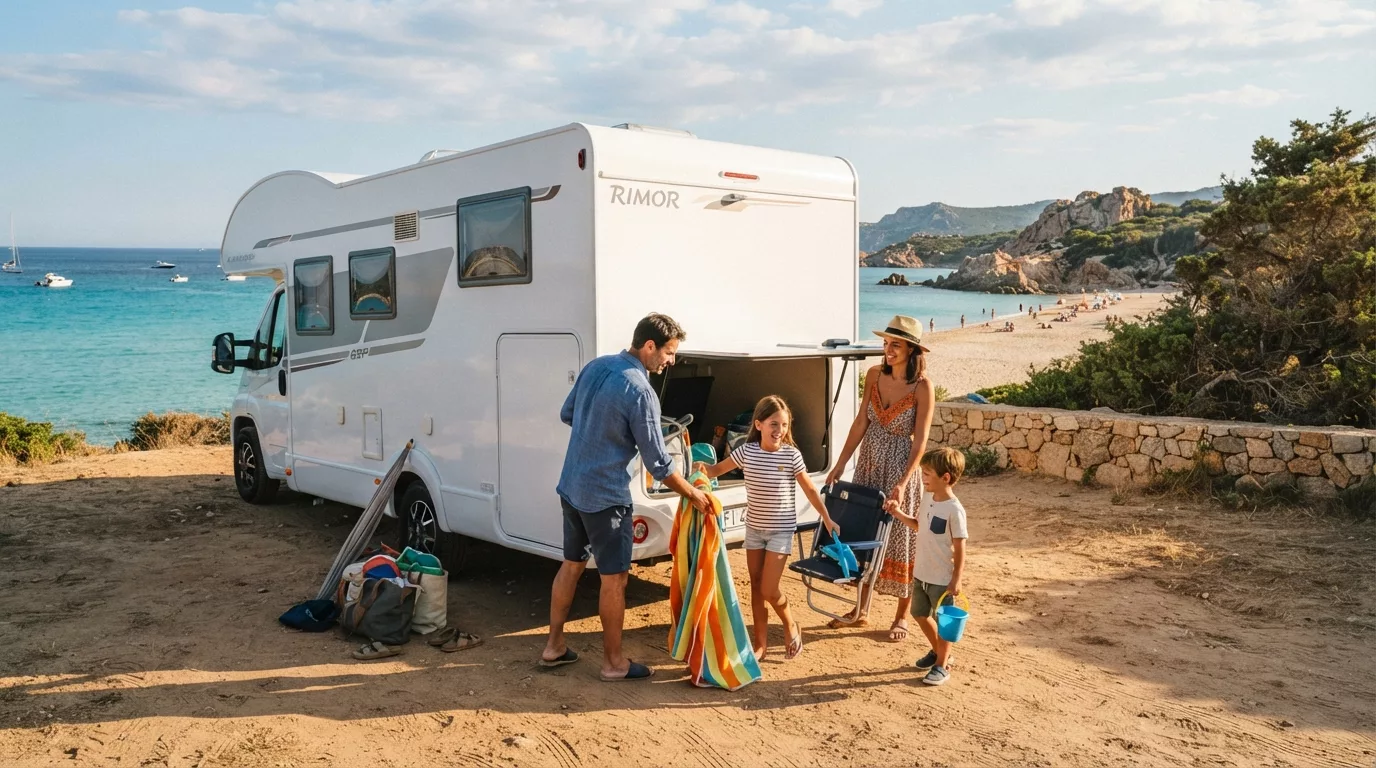
Planning Sardinia by campervan: the basics for a smooth trip
Sardinia, with its rugged coastlines, crystal-clear waters, and breathtaking landscapes, is a sought-after destination for campervan travelers. Organizing a holiday on this island requires careful planning, especially regarding sea transport and stopover logistics. Traveling by vehicle means enjoying priceless flexibility, being able to change plans at the last minute and discover less-traveled corners of paradise.
The first fundamental step is booking the ferry. Major shipping companies offer connections from various Italian ports (Genoa, Livorno, Piombino, Civitavecchia) to the Sardinian ports of Olbia, Golfo Aranci, Porto Torres, Cagliari, and Arbatax. It is advisable to book well in advance, especially if traveling during high season (July and August), to secure the best fares and availability of cabins or deck passage, depending on preferences and budget.
When traveling with your campervan, it is essential to communicate the exact dimensions of the vehicle (length, width, height) at the time of booking. This will affect the ticket price and ensure adequate space on board. Remember that the duration of the crossing varies depending on the route and the company chosen, ranging from 6-8 hours of daytime sailing to 10-12 hours overnight, allowing you to arrive at your destination in the morning ready to start exploring.
Finding ideal stops in Sardinia for campervan travelers
Once you land in Sardinia, finding a place to stay overnight and park becomes a priority. The island offers various options for campervan travelers, each with its pros and cons:
- Equipped parking areas: these are the most practical and often most economical solution. Many have water and waste disposal facilities, electricity hookups, and restrooms. Their locations are often strategic, close to towns or beaches. It is always useful to consult specialized guides or dedicated apps to find those best suited to your needs.
- Campsites: offer greater comfort and services, such as swimming pools, restaurants, and entertainment. They are ideal for those seeking a more structured holiday or for those traveling with young children who need dedicated spaces and activities. The choice between a parking area and a campsite largely depends on the type of holiday you desire. It might be useful to read parking areas vs campsites: when to choose what for your campervan trip.
- Wild camping (where permitted): Sardinia is an island that, in some areas, still allows wild camping in certain places, often indicated by appropriate signs. It is crucial to inquire about local regulations, which can vary from municipality to municipality, and above all, to respect the environment, leaving no litter and not occupying unauthorized spaces. Respecting the rules is crucial to preserve these opportunities for all campervan travelers.
An aspect not to be underestimated is managing sand. Sardinian beaches are wonderful, but sand tends to get everywhere. Having a broom, shovel, and a good portable vacuum cleaner can make a difference. A useful article on this topic is sand in the campervan: how to prevent it from invading every corner.
The most beautiful beaches in Sardinia for campervan travelers
The choice of beaches largely depends on the area of Sardinia you plan to explore. Each coast offers unique scenery and different services for those arriving by vehicle.
Emerald Coast and surroundings
This area is renowned for its turquoise waters and beaches of fine white sand. Beaches like Principe Beach, Capriccioli, and Liscia Ruja are spectacular. There are often dedicated parking areas for campervans, with fees and time or size restrictions, but they allow access to the coves with a short walk. It is advisable to arrive early in the morning to find a spot.
La Maddalena Archipelago
Although direct campervan access is limited to the main islands, you can leave your vehicle in parking areas or lots in Palau and take ferries to the islands of the archipelago (La Maddalena and Caprera). Here you will find some of the most iconic beaches, such as Cala Coticcio (Tahiti), Cala Spalmatore, and Spiaggia dei Due Mari. Exploring these islands is easier on foot or by renting a scooter, once your campervan is safely parked.
North-West: Stintino and Alghero
La Pelosa in Stintino is one of the most famous beaches, with its Aragonese tower and Caribbean sea. Access during high season is often regulated and limited in number, with campervan parking nearby. In Alghero, besides the historic center, you can explore beaches like Maria Pia, with its pine forest offering natural shade, and the coves along the road to Bosa.
South Coast: Chia, Villasimius, and Costa Rei
The south of Sardinia boasts wonderful beaches, often more accessible and with ample parking for campervans. Chia offers sandy dunes and shallow waters, ideal for children. Cala Sinzias and Punta Molentis near Villasimius are enchanting. Costa Rei is famous for its long golden sandy beach, with parking areas nearby.
Oristano and Sinis
For those seeking wilder and less crowded beaches, the Sinis peninsula offers gems like Is Arutas (with its quartz grains), Mari Ermi, and Spiaggia di San Giovanni di Sinis. These areas are perfect for nature lovers seeking tranquility.
Practical tips for traveling in Sardinia by campervan
Traveling by campervan in Sardinia means embracing a nomadic lifestyle, but there are some tips that can make the experience even more enjoyable:
- Water and services: plan your stops for refilling potable water and emptying gray and black water. Many parking areas and some gas stations offer these services.
- Shade and heat: Sardinian summers can be very hot. Use awnings, gazebos, or external covers to create shaded areas. Keep the campervan well-ventilated and consider using fans or portable air conditioners if necessary. In case of extreme heat, it is useful to consult extreme weather in a campervan: what to do with heat and storm alerts.
- Navigation and ZTL: use an updated GPS and pay attention to road signs. Many historic centers have ZTL (Limited Traffic Zones), and parking a campervan in these areas can result in hefty fines. Getting informed in advance is the best strategy.
- Security: as with any trip, it is important to take precautions for the security of your vehicle and personal belongings. Always close windows and roof vents when leaving the campervan unattended, and do not leave valuables in plain sight. For more details, you can consult the security category.
- Groceries and cooking: plan your grocery shopping strategically, perhaps stocking up at supermarkets in larger towns. Cooking in the campervan is part of the adventure, but for those traveling with children, quick and low-mess recipes are a lifesaver.
Can I drive a large campervan in Sardinia?
Sardinia has roads of all types, from highways to winding coastal roads. Driving a campervan, especially a large one, requires attention and prudence. It is essential to know the dimensions of your vehicle and adapt your driving to the road conditions. Main roads and routes between cities are generally well-maintained and suitable for all types of campervans. Secondary roads, especially those leading to isolated coves or inland, can be narrower and more winding. In these cases, it is advisable to inquire about accessibility or, alternatively, use a car or scooter if you are traveling with a larger vehicle. A useful reference can be driving a long campervan: the differences compared to a car for a serene holiday.
What are the regulations for parking and stopping in Sardinia?
Regulations regarding campervan parking and stopping in Sardinia can vary significantly from municipality to municipality. Generally, it is permitted to stop in public parking areas where recreational vehicles are allowed to stop, provided that no more space is occupied than a normal vehicle and no activities incompatible with stopping are carried out (such as opening awnings or setting up tables outside). Equipped parking areas are the safest and most regulated option. Wild camping is generally prohibited along roads, in protected natural areas, and in built-up areas, unless otherwise indicated. It is always good practice to inquire at local tourist offices or consult municipal ordinances to avoid unpleasant surprises. The Normattiva.it website can be a resource for consulting laws and decrees on road traffic, but for local specifics, it is best to refer to municipal sources.
Sardinia by campervan is an experience that offers unique emotions. With the right preparation and a bit of adventurous spirit, your trip to this wonderful island will be unforgettable.
mitcamper tip: To make your Sardinian adventure even richer, consider participating in rallies or gatherings organized for campervan travelers. It's a great way to share experiences, exchange practical advice, and meet other people who, like you, love life on the road and discovering new horizons.