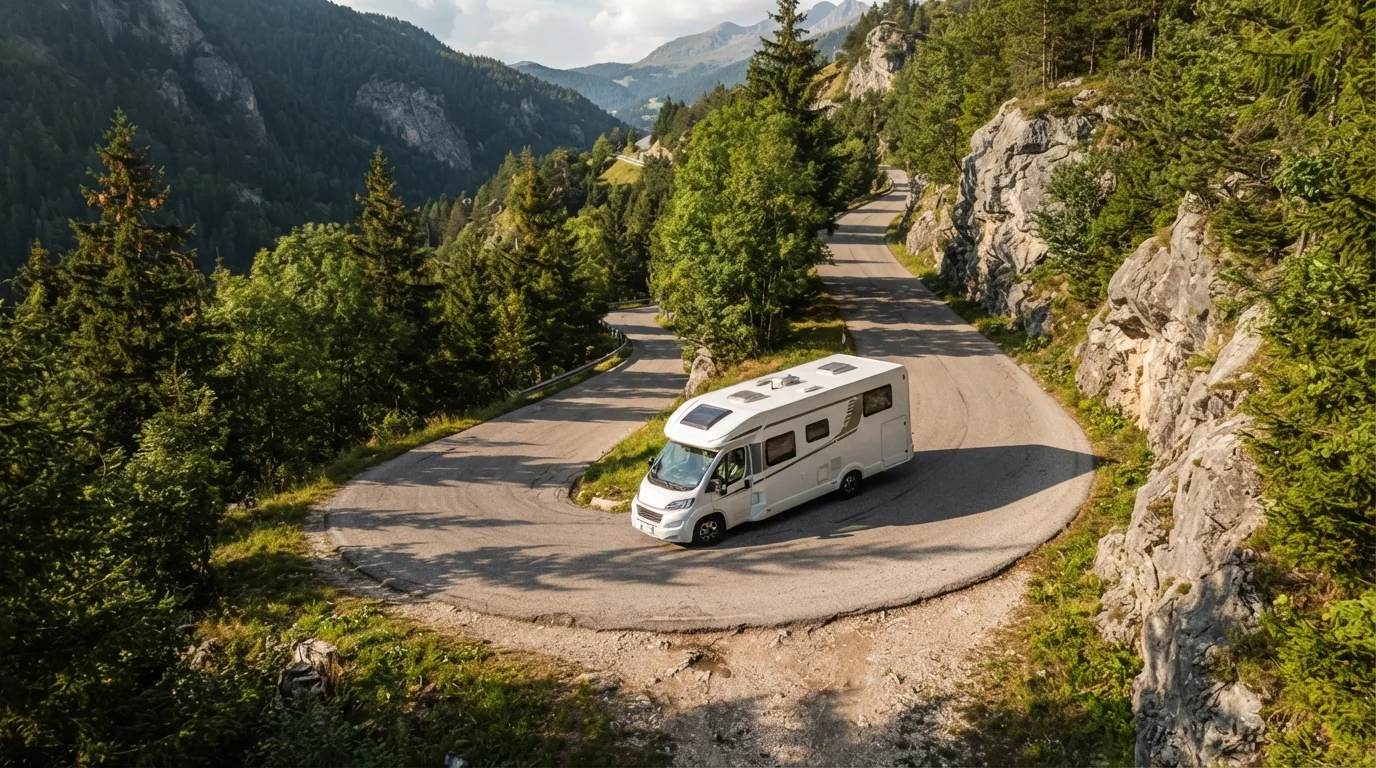
Tackling mountain ascents with a motorhome
Mountain ascents are one of the most common challenges for motorhome travelers. Engine power, vehicle weight, and road gradient require a specific approach to ensure safety and comfort.
The right gear is crucial
The golden rule is to maintain an appropriate gear. Don't wait for the engine to struggle or the speed to drop drastically. Shift to a lower gear before it's necessary, anticipating the incline. This allows the engine to operate at a more constant and less stressful RPM, preventing overheating and ensuring smoother power delivery. Imagine facing an uphill stretch: if you're in fifth gear and feel the engine straining, shift to fourth. If the climb is very steep, you might even need to go down to third.
Engine management and overheating
Motorhomes, especially larger or heavily loaded ones, can suffer from overheating during long climbs. Constantly monitor the engine temperature via the dashboard gauge. If the needle approaches the red zone, don't hesitate to pull over in a safe spot to let the engine cool down. Sometimes, a 15-20 minute stop can make all the difference. Ensure the cooling system is efficient before embarking on a trip to mountainous areas.
The importance of speed
Don't rush. Moderate and constant speed is key to safely tackling ascents. Avoid sudden acceleration and abrupt braking. Smooth driving not only protects the vehicle but also allows you to better enjoy the scenery and react promptly to any unforeseen events.
The descent: another challenge not to be underestimated
Mountain descents can be just as tricky as ascents, especially concerning brake wear and vehicle control. Improper use of brakes can lead to overheating and loss of effectiveness, a concrete risk in these situations.
Engine braking: your best ally
The most effective and safest technique for handling descents is using engine braking. Just as with ascents, downshift. By engaging a lower gear (e.g., shifting from fifth to fourth, or fourth to third), you utilize the engine's resistance to slow the motorhome, drastically reducing the use of service brakes. This not only preserves the brakes but also ensures greater control over the vehicle's speed.
When to use service brakes
Service brakes should be used sparingly, only for necessary speed adjustments or to stop. Avoid holding them down for extended periods. Light, progressive braking is always preferable to violent, prolonged braking. If you feel the brakes starting to heat up (you might notice a acrid smell or reduced effectiveness), pull over safely as soon as possible and let them cool down completely.
Beware of curves and changes in gradient
Mountain roads often feature sharp curves and sudden changes in gradient. Reduce speed before entering a curve, maintain your line, and accelerate gently out of it. Pay close attention to road signs indicating dangerous curves, icy patches, or steep gradients. Visibility can be limited, so always drive cautiously.
Practical tips for driving a motorhome in the mountains
Before setting off: preparation is key
Thorough preparation is essential for a mountain motorhome trip. Always check:
- Tire pressure: ensure it's appropriate for the vehicle's weight and road conditions.
- Fluid levels: check engine oil, coolant, and brake fluid.
- Brakes and clutch: verify their operational status.
- Weather conditions: check forecasts, especially during peak season or in case of bad weather. Never underestimate mountain weather; it can change rapidly. For more details, read our article on Extreme weather in a motorhome: what to do with heat and storm alerts.
While driving: constant attention
The mountains demand maximum concentration. Avoid distractions and always be aware of your vehicle's dimensions. Remember that a motorhome is longer, taller, and heavier than a car, which affects maneuverability, braking distances, and fuel consumption. For a general overview of driving a larger vehicle, consult Driving a long motorhome: the differences compared to a car for a serene holiday.
Regulations and signage
Pay attention to specific signage for heavy vehicles and mountain roads. In Italy, the regulations governing vehicle circulation, including motorhomes, can be found on the official Normattiva.it website. For example, some roads may have weight or height restrictions or be prohibited for vehicles with certain characteristics. It's always wise to get informed beforehand.
Weight management
An overloaded motorhome struggles more on ascents and requires more space and time to brake on descents. Ensure you comply with the maximum permitted weight and distribute the load evenly inside the vehicle. Don't carry more than necessary.
Stopping and resting
Driving in the mountains can be tiring. Don't hesitate to stop in safe rest areas to recuperate, especially after long ascents or challenging descents. Plan your stops in advance, consulting guides or apps for motorhome service areas.
When the mountains call: safety first
Traveling by motorhome in the mountains is a wonderful experience that allows you to discover otherwise inaccessible corners of paradise. However, safety must always be the absolute priority. A motorhome is a substantial vehicle, and driving it on complex roads requires respect, preparation, and attention.
Motorhome maintenance is essential
Even before tackling mountain roads, ensure your motorhome is in perfect condition. A thorough check of the mechanics, brakes, tires, and cooling system is an investment in your safety and that of your travel companions. The maintenance category on our blog offers useful tips to keep your vehicle in top shape.
What to do in case of unforeseen events?
Despite maximum caution, unforeseen events can occur. It's useful to have a well-stocked first-aid kit, basic tools for minor repairs, and to know the local emergency numbers. The peace of mind that comes from knowing you are prepared makes the adventure even more enjoyable.
mitcamper tip: connect with other travelers
The mitcamper community is a valuable resource for exchanging practical advice and travel experiences. If you're planning a mountain adventure or have doubts about driving your motorhome in these conditions, connect with other motorhomers. You might discover useful tricks and tips that only those who have traveled those roads before can offer, creating authentic connections with people who share your passion for the road life.