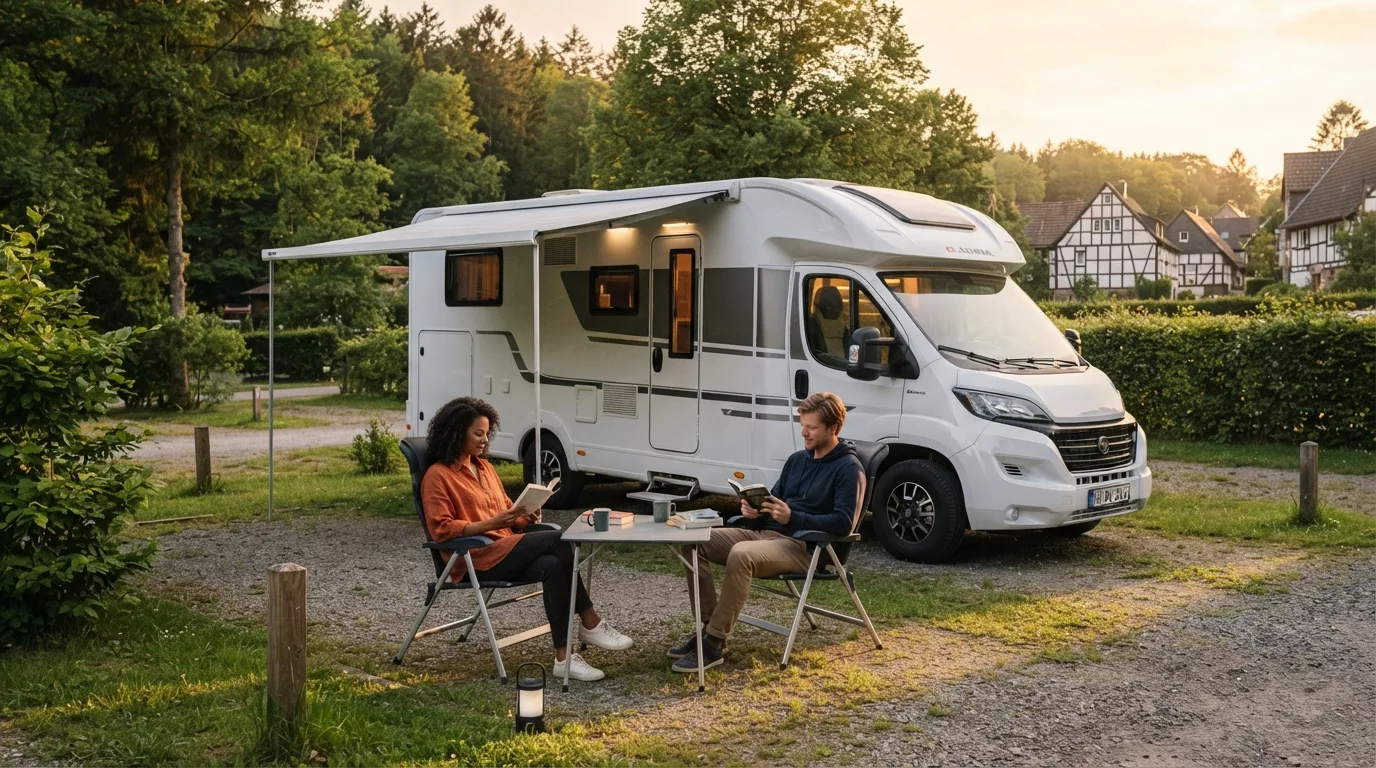
How do you handle: Coexistence in Parking Areas: A Delicate Balance?
Camper parking areas, whether they are the German Stellplatz, the French aire de service or aire camping-car, the Spanish áreas de servicio, or the Italian equipped areas, have become pillars of road tourism in Europe. They offer a practical and often economical base, fostering encounters between people with the same passion for freedom and camper travel. However, the forced proximity in these spaces can sometimes generate friction, and noise is one of the most common factors for potential conflict. Managing this variable is crucial to preserving the community spirit and ensuring a pleasant experience for everyone, from solo travelers to couples, and those traveling with children.
How do you handle: Understanding the Needs of Camper Travelers?
Every camper has their own rhythm and needs. Someone traveling alone might desire quiet to read or work, while a family with young children might need space for them to play or simply a bit more tolerance during leisure moments. Likewise, someone arriving late at night or leaving early in the morning has different needs than someone spending the entire day in the area. Recognizing these differences is the first step towards harmonious coexistence.
Noise: A Matter of Sensitivity and Context
Noise in a parking area is not just a matter of decibels, but also of individual sensitivity and context. Noise that is harmless to some can be a source of significant disturbance to others. Consider engines running for long periods, doors slamming, loud music, boisterous conversations, or, above all, children playing and shouting. While children are often synonymous with joy and vitality, it's undeniable that their enthusiasm can translate into high sound levels. The key is not to eliminate noise, but to manage it with awareness and mutual respect.
Noise Etiquette: Unwritten Rules for the Community
There are no specific laws regarding noise in parking areas, but there is an implicit code of conduct, based on common sense and respect. Here are some fundamental principles:
- Quiet Hours: Most parking areas have unofficial but widely recognized quiet hours, typically from 10:00 PM to 7:00 AM or 8:00 AM. During these times, it is essential to minimize noises such as music, television, loud conversations, and noisy activities.
- Managing Children: It is important for parents to supervise their children, teaching them to respect quiet during nighttime hours and to moderate their volume during the day, especially in close proximity to other vehicles. If possible, encourage play in designated areas or away from other campers.
- Engines and Generators: Using engines for extended periods or generators, especially during rest hours, is often frowned upon. If necessary, try to use them as little as possible and during daylight hours.
- Social Activities: If organizing a dinner or a social gathering, pay attention to the volume of music and conversations, especially if you are close to other vehicles already resting.
- Arrival and Departure: Try to perform parking maneuvers and loading/unloading operations as quietly as possible, avoiding slamming doors or storage compartments, especially during nighttime or early morning hours.
How to Address Others' Noise Graciously
What to do when noise from others exceeds the tolerance threshold? The first and most important rule is peaceful communication. Instead of harboring resentment, a direct but gentle approach can resolve many situations.
Dialogue: The Camper's First Tool
If the noise is excessive and persistent, approach the neighbors in question calmly. You could say something like: "Excuse me, I'm sorry to bother you, but the noise is a bit loud, and we're trying to rest. Could you please lower the volume a little?" Very often, people don't realize they are disturbing others and are willing to cooperate. Remember that you too could unintentionally disturb someone else.
If direct dialogue is not possible or does not yield results, and the disturbance is particularly severe, you can consider discussing it with the area manager, if present, or with other campers who share the same issue, seeking a collective solution.
The Importance of Mutual Respect in Parking Areas
Parking areas are a microcosm of society, where different people meet and share spaces. Mutual respect is the key to transforming these places from potential sources of stress into true oases of tranquility and socialization. Learning to coexist with different needs, communicating constructively, and making small sacrifices is what makes camper travel an enriching experience for everyone.
Let's remember that those who travel by camper often seek freedom and the opportunity to discover new places, but also the serenity of a peaceful rest. Contributing to maintaining a serene environment in parking areas is an act of civility that benefits the entire community of campers. To learn more about general rules of good neighborliness while traveling, you can consult our article on respecting the territory and rules of good neighborliness.
Useful reads on the mitcamper blog
- Motorhomers and respect for the territory: rules of good neighborliness
- Adriatic Coast by Campervan: From Venice to Puglia, an Unforgettable Journey
mitcamper Tip
Traveling by camper means meeting new people and sharing experiences. On mitcamper, you can connect with other travelers who share your passion and values, finding compatible travel companions for advice exchanges or simply for a quiet chat in European parking areas.