How do you handle: Motorhoming: freedom and responsibility on the road?
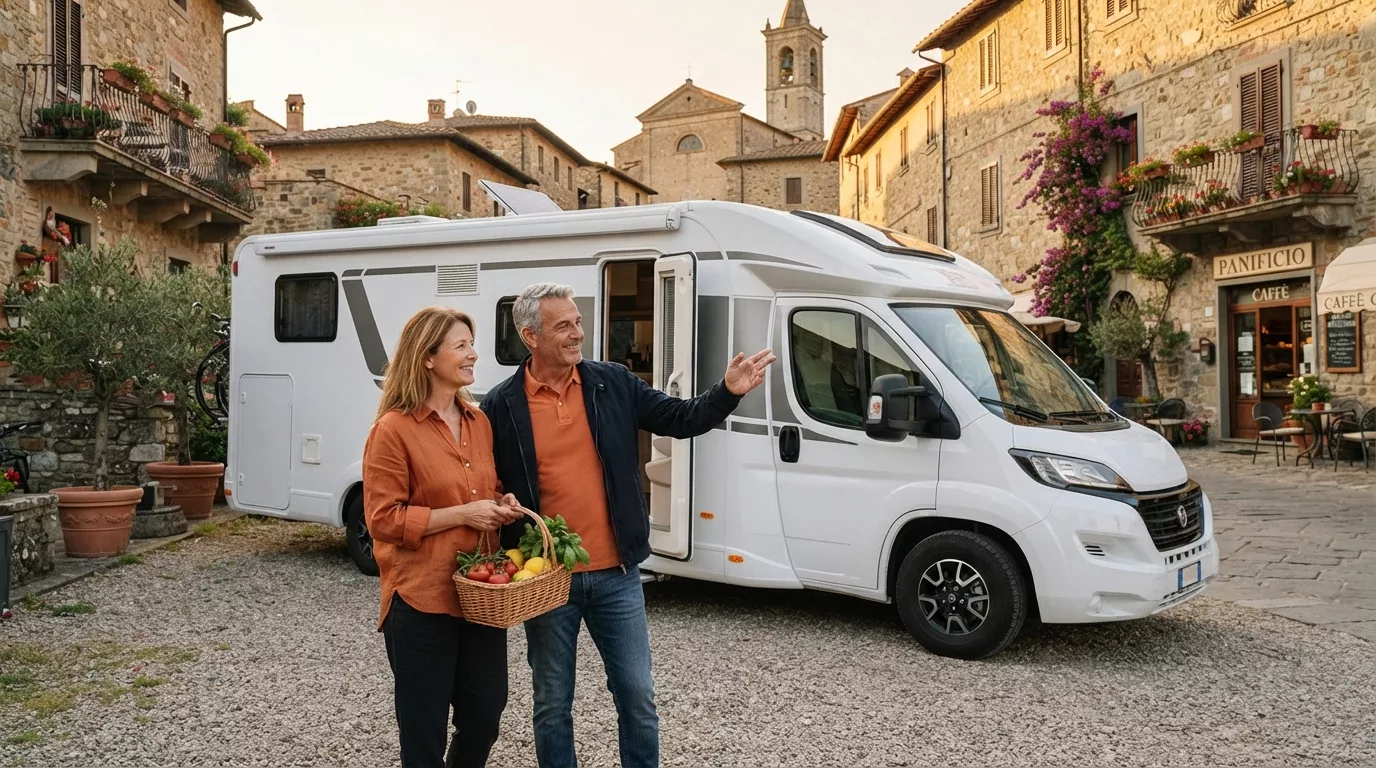
The charm of motorhoming lies in its inherent freedom. The possibility of waking up in a new place every day, exploring remote corners, or living in close contact with nature attracts an ever-increasing number of people. Whether couples, friends, solo travelers, or families, those who travel by motorhome seek authentic experiences and a deeper connection with the land. However, this freedom comes with great responsibility: that of preserving the environment and integrating respectfully into the communities visited.
The concept of good neighborliness extends far beyond the boundaries of one's own pitch. When traveling by motorhome, your vehicle becomes a sort of mobile home moving within a broader context, made up of people, rules, and traditions. Being a conscious motorhomer means understanding that every action can have an impact, whether positive or negative, on the surrounding environment and on the perception that local communities have of road travelers.
How do you handle: Parking areas: a meeting point between motorhomers and the territory?
Motorhome parking areas, known in Europe by various names such as Stellplatz (Germany), aire de service / aire camping-car (France), or área de servicio (Spain), have become fundamental pillars for those traveling with their vehicles. These spaces, often managed by municipalities or private entities, offer essential services like grey and black water disposal, drinking water refill, and sometimes electricity. Their very existence is the result of a tacit agreement between local administrations and the motorhoming community, based on mutual trust.
Respecting these areas is therefore a primary duty. This implies:
- Using dedicated services: dispose of grey and black water only in designated disposal areas, never directly on the ground or in unsuitable drains. The same applies to emptying chemical toilets.
- Maintaining cleanliness: leave the area cleaner than you found it, taking all your waste with you.
- Respecting spaces: do not occupy more space than necessary, do not hang laundry outside the vehicle, or create clutter.
- Observing specific rules: each area may have its own regulations regarding access hours, maximum stay, or payment.
Correct behavior in these areas not only facilitates travel but also helps maintain these facilities, which are sometimes threatened by those who abuse them, in good working order.
Beyond parking areas: responsible itinerant tourism
Motorhoming is not limited to equipped areas. Often, the real magic lies in finding a quiet spot to stop for the night, perhaps in a secluded village or a natural nook. Even in these cases, the rules of good neighborliness become even more crucial.
Where to park and where not to?
The first rule is discretion. Avoid parking in obviously unsuitable places, such as private areas, resident-only parking, protected zones, or too close to private homes. In Italy, for example, free parking is often tolerated where not expressly forbidden, but it is essential to inquire about local regulations. Many municipalities display signs indicating parking bans for motorhomes or zones where parking is allowed only for a limited time. Ignoring these signs is an act of incivility that harms the entire category.
In general, it is good practice to look for designated parking areas, such as those often found on the outskirts of towns or near tourist attractions. To learn more about parking strategies in cities, we recommend reading our article Parking in the city with a motorhome: practical strategies for every adventure.
Noise and peaceful coexistence
Those traveling by motorhome, whether alone or in a group, must pay attention to noise, especially during night or morning hours. Avoid running generators, playing loud music, or talking loudly when others might be resting. Quiet is a precious commodity, both for travelers and for the residents of the places we visit.
This also applies to pets: ensure they do not disturb public peace and always clean up after them.
Environmental impact: daily gestures that make a difference
Motorhoming, by its nature, is a way of traveling that can have a significant environmental impact if not managed carefully. The commitment to reduce this impact is an essential component of respecting the territory.
Water and waste: conscious use
Water is a precious resource, especially in some parts of Europe. Use it sparingly for showers, washing dishes, and cleaning the vehicle. Similarly, waste management is crucial. Always carry your own bags and dispose of them in appropriate containers, separating waste when possible. Never abandon waste in the environment, not even organic waste, as it can still disturb the local ecosystem.
For long-term travelers, managing clean laundry is important. Read our tips on Washing clothes while traveling: solutions for long periods on the road.
Minimizing visual and auditory impact
When stopping in natural areas, it is important to minimize visual impact. Avoid setting up tents or gazebos that excessively alter the landscape, or leaving objects lying around. Likewise, the noise of engines, slamming doors, or loud conversations can disturb wildlife and those seeking tranquility.
Community and integration: being welcome guests
Being a motorhomer also means being part of a community, both that of road travelers and that of the places visited. Interacting with local people, showing interest in their culture and traditions is a way to enrich your travel experience and to be seen not as outsiders, but as welcome guests.
Interact with respect
When shopping in a local store, eating in a typical restaurant, or visiting an attraction, a smile and a friendly greeting go a long way. Asking for information, showing curiosity, and appreciating what the territory offers helps create a positive connection. Avoid behaving intrusively or imposing your own habits.
Learn about local customs
Each region has its own customs and unwritten rules. Informing yourself beforehand can avoid misunderstandings and unpleasant situations. For example, in some mountainous areas, respect for trails and the environment is particularly important. For mountain lovers, we suggest reading Dolomites by motorhome: rules, passes, and recommended stops.
Regulations: knowing the rules for peaceful travel
Each European country has its own specific regulations regarding the circulation and parking of motorhomes. Knowing these rules is essential to avoid fines and problems.
Country-specific regulations
In Italy, for example, there are precise provisions regarding parking and transit bans for motorhomes in certain historic centers or protected areas. The Highway Code governs parking, but many municipalities supplement with specific ordinances. For official information, you can consult the website of the Ministry of Infrastructure and Transport or the websites of individual municipalities.
In France, aires de camping-car are widespread and regulated. Parking is often free or low-cost, but limited in time. In Germany, Stellplatz offer an alternative to campsites, but with stricter stay rules. For Germany, a useful reference is the ADAC website: adac.de.
In Spain, regulations are managed at the national level by the Ministry of Transport, Mobility and Urban Agenda (MITMA) and by the autonomous communities. It is always advisable to check local ordinances. A useful reference is the MITMA website: mitma.gob.es.
Tolls and vignettes
Traveling by motorhome in Europe often involves using toll highways or needing vignettes to circulate in certain countries. Informing yourself in advance about costs and payment methods can help plan your budget and avoid surprises. For example, in Italy, Telepass is a convenient solution for paying tolls: for more details, consult our article Motorhome tolls in Italy: costs and Telepass for worry-free travel.
mitcamper advice
Traveling by motorhome is a unique opportunity to explore Europe and connect with places and people. On mitcamper, you can find travel companions to share experiences, advice, and itineraries, creating a network of support and friendship that makes every adventure even richer. Discover how to connect with other enthusiasts and make the most of your passion for motorhoming in Europe.