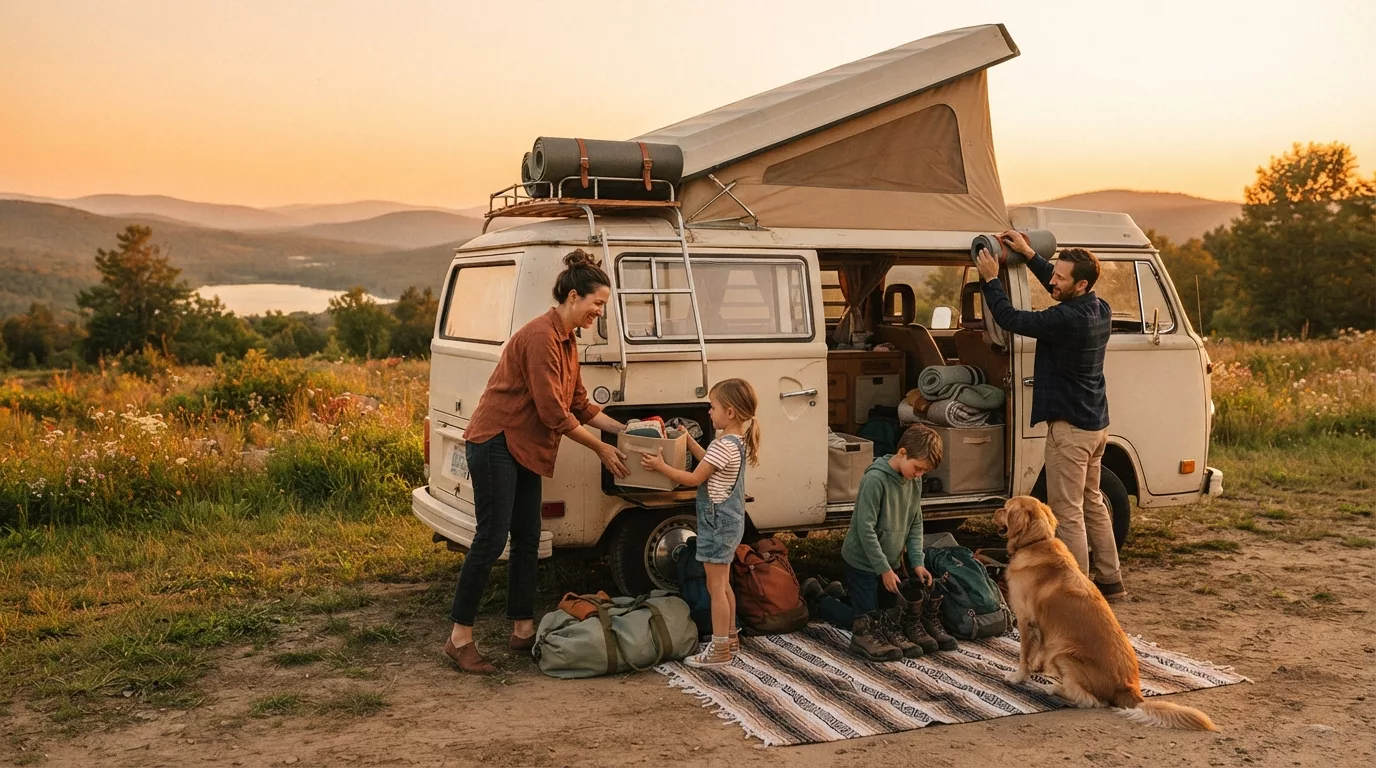
The call of the road, the freedom to stop wherever you wish, the possibility of waking up to breathtaking views: camper life offers a unique travel experience. However, to fully enjoy this adventure, it's essential to tackle one of the most common challenges for those who choose this holiday mode: packing. In a limited space like a camper, every item must find its place, and well-organized luggage translates to less stress and more time for relaxation and exploration.
Whether you're an experienced RVer or a beginner, whether you're traveling as a couple, with friends, or as a family, the basic principles for efficient packing remain the same. The goal is to maximize space, ensure accessibility to necessary items, and maintain a certain order, avoiding that sense of chaos that can easily take over.
Planning: The First Step Towards Stress-Free Packing
Before even thinking about what to put in your bags, accurate planning is essential. This doesn't just mean deciding where to go, but also considering a series of factors that will directly influence the type and quantity of luggage to bring.
Define the Duration and Destination of Your Trip
- Duration: A weekend getaway will require a different approach than a trip of several weeks. The longer the stay, the greater the need to optimize space and plan for an efficient laundry system for clothes.
- Destination and Climate: Researching the expected climate is crucial. Bringing inadequate clothing can mean suffering from heat or cold, or finding yourself with items you'll never use. Also consider the type of activities you plan to do: mountain hikes, city walks, beach days will require specific gear and clothing.
- Type of Camping: If you plan to stay mainly in equipped areas with all services, you might need to bring less bulky self-sufficiency equipment. Conversely, if your travel style is more adventurous and involves free camping, you'll need to consider everything needed to be autonomous.
Create a Detailed List
Once these aspects are defined, it's time to draw up a complete list. Divide it by category (clothing, kitchen, hygiene, tools, etc.) and try to be as specific as possible. This will help you not to forget anything essential and, above all, to avoid bringing superfluous items that would only take up precious space.
Optimizing Space: Smart Tricks and Accessories
Space in a camper is limited, but with the right strategies, you can make the most of it. The goal is to make every corner useful and accessible.
Choose the Right Containers
Forget classic rigid and bulky suitcases. For campers, more flexible and modular solutions are ideal:
- Soft duffel bags and sacks: These are perfect for clothing, as they adapt better to the irregular spaces of storage compartments and overhead lockers.
- Stackable and modular containers: For the kitchen, pantry, or tools, opt for transparent plastic containers or those in coordinated colors that can be easily stacked. This will allow you to see what's inside at a glance and utilize the height of the compartments.
- Drawer and cabinet organizers: Dividers and smaller boxes help maintain order inside drawers and cabinets, preventing items from shifting while driving.
- Vacuum seal bags: A real ally for reducing the volume of duvets, blankets, or bulky clothing. Remember, however, that once opened, they will take up space again, so use them wisely.
Utilize Every Inch
Don't underestimate seemingly unused spaces:
- Inside of doors: Hang organizers with pockets to store small items like documents, keys, chargers.
- Under beds: If your camper has storage beds, make the most of them for linens, shoes, or less frequently used equipment.
- Walls: Using adhesive hooks or pegboards, you can create vertical space to hang kitchen utensils, towels, or other items.
- Storage compartments (gavon): Organize storage compartments strategically, placing heavier and less frequently used items at the bottom and lighter, everyday items at the top or in easily accessible positions.
Clothing Organization: Less is More
Clothing is often one of the items that takes up the most space. The key is versatility and layering.
The "Jolly Items" Rule
Choose items that can be easily mixed and matched and are suitable for various occasions. Think about:
- Technical fabrics: such as merino wool or breathable synthetic fabrics, which dry quickly and take up little space.
- Neutral colors: that easily match the rest of your wardrobe.
- Convertible items: such as pants that turn into shorts or jackets with detachable sleeves.
Folding Techniques
The rolling method is often more efficient than traditional folding for reducing wrinkles and optimizing space in soft bags. Alternatively, you can use packing cubes to separate types of clothing (e.g., underwear, t-shirts, pants).
Camper Kitchen: Practicality and Minimalism
A kitchen on wheels requires a different approach than a home kitchen. The goal is to have the essentials for preparing simple and tasty meals without taking up too much space.
The Essentials for Cooking
Focus on the most used utensils:
- Stackable pots and pans: Choose sets designed to save space.
- Unbreakable plate and cup sets: made of hard plastic, melamine, or bamboo.
- Multifunctional utensils: such as knives that cut and open, or ladles that also serve as skimmers.
- Airtight containers: for storing leftovers or preparing take-away meals.
- Reusable bags: an eco-friendly alternative to plastic bags.
Smart Pantry
For your pantry, prioritize long-lasting products and compact packaging:
- Dry goods: pasta, rice, dried legumes, cereals.
- Canned goods: which take up little space and are practical.
- Spices in small containers: or a travel spice set.
- Oil and vinegar in small bottles or dispensers.
Remember to also utilize vertical space with additional shelves or organizers to hang inside overhead cabinets.
Hygiene and Personal Care: Essentiality and Practicality
In this area too, the mantra is minimalism and practicality.
- Travel-sized products: shampoo, conditioner, body wash in reduced sizes or refillable.
- Solid soap: takes up less space and lasts longer.
- Microfiber towels: dry quickly and are very lightweight.
- Compact toiletry bag: with only the essentials for oral hygiene, skincare, and first-aid medications.
Consider purchasing a hanging organizer for the bathroom, which will allow you to keep everything tidy and within reach.
Leisure and Safety Equipment
Depending on the type of vacation, you might need specific leisure equipment (e.g., camping chairs, a small table, sports gear) and safety equipment for the vehicle (e.g., leveling wedges, cables, emergency kit).
Here too, the keyword is optimization. Choose foldable and compact equipment. For safety, create a well-organized emergency kit in a dedicated box, ensuring all items are easily accessible in case of need.
Final Tips for Always Organized Luggage
Packing your camper is not a one-time event, but an ongoing process. Here are some tips to help you maintain order throughout your trip:
- Put things away immediately after use: get into the habit of putting everything back in its place as soon as you've finished using it.
- Do a periodic "inventory": every now and then, take a look at what you've actually used and what you haven't. This will help you refine your list for future trips.
- Involve everyone: if you're traveling as a family, teach the little ones the importance of keeping their spaces and belongings tidy.
- Don't be afraid to leave something at home: we often bring things we think we might use, but which remain unused. Be critical in your choices.
Packing your camper stress-free is absolutely possible. It requires a bit of planning, a touch of creativity, and choosing the right accessories. With these tips, you can fully enjoy your road adventure, knowing that everything you need is at hand, organized, and easily accessible.
mitcamper tip: Life on the road is an adventure that is enriched when experiences and advice are shared. On mitcamper, you can connect with other enthusiasts, exchange ideas, and discover new ways to make the most of your journey. You might find adventure companions or simply valuable suggestions from those who, like you, love the freedom of the camper.