
The Caravan Salon in Düsseldorf closed its doors on September 6th, but a question lingered in the halls: where on earth were the Chinese 4x4 campers that have been stealing the show for a few editions now? This year, the answer is more interesting than a price list. There were (almost) no production vehicles to buy. There were demonstrators: vehicles built to make you say “I don’t believe it” and to gauge if Europe is ready. The most talked-about stand was that of HMT Solutions, a Shanghai-based company that specializes in safety components and automotive textiles — and which brought a smartphone-magnet off-road fleet to Messe Düsseldorf.
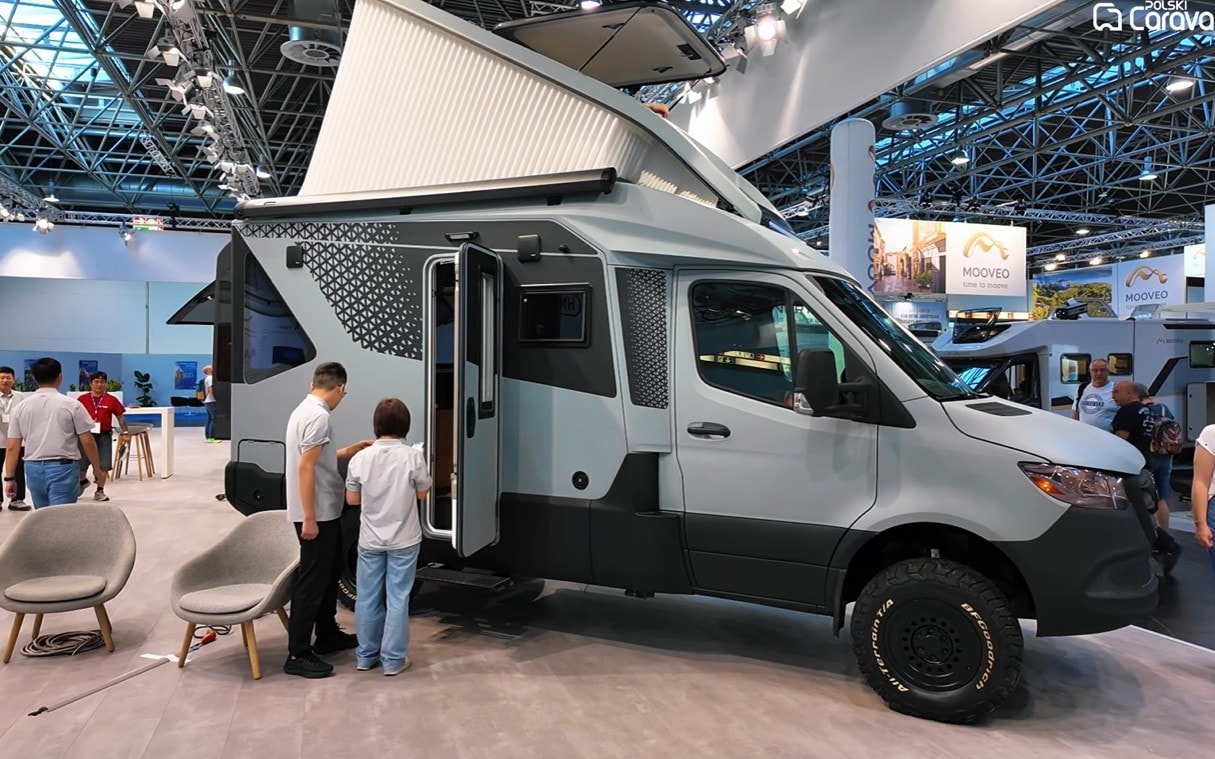
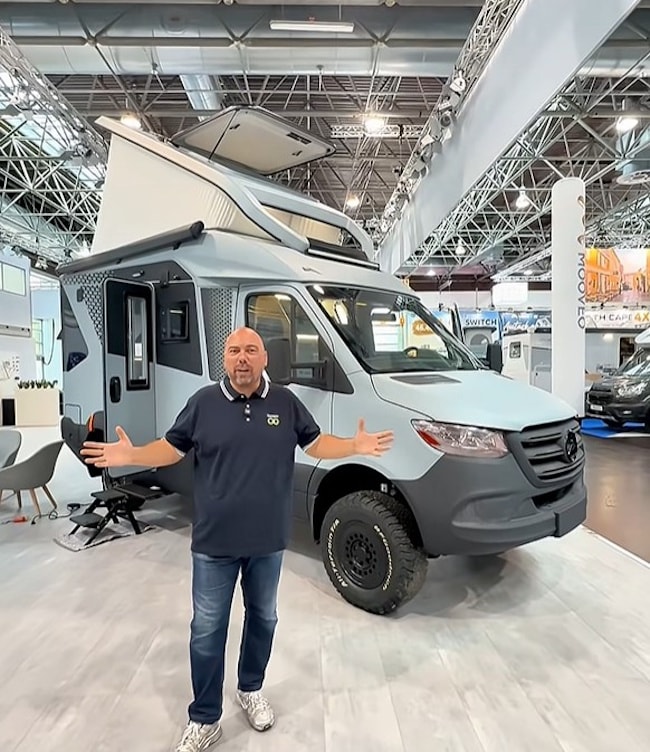
What did the Chinese really bring to Düsseldorf 2026?
Several trade show reports (AUTO BILD, autoevolution, Polski Caravaning) converge on one point: in 2026, there were no mass-produced Chinese campers “from the lot” like those seen in previous editions. No ultra-compact double-deckers, no low-cost liners from a price list. The only production exception mentioned multiple times is the Lidu RV caravans (e.g., Aquila 360), which already have a distributor in the Netherlands. Everything else at the HMT stand was technology on display.
HMT commissioned a handful of conversions: two off-road motorhomes based on the Mercedes-Benz Sprinter 4x4, a campervan based on the MAN, an even more compact van, and a large vehicle on a military truck chassis. They weren't selling. They weren't aggressively seeking dealers. A representative clearly stated that in 2027, the stand will be larger, and a production model might arrive. Translation for those dreaming of a Chinese 4x4 “immediately”: this year, Düsseldorf showcased the future, not the configurator.
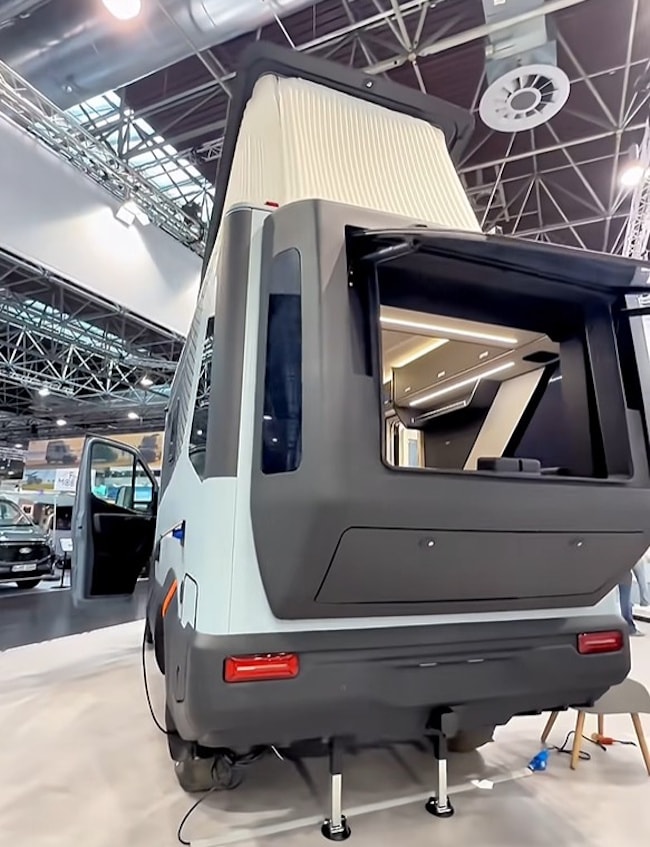
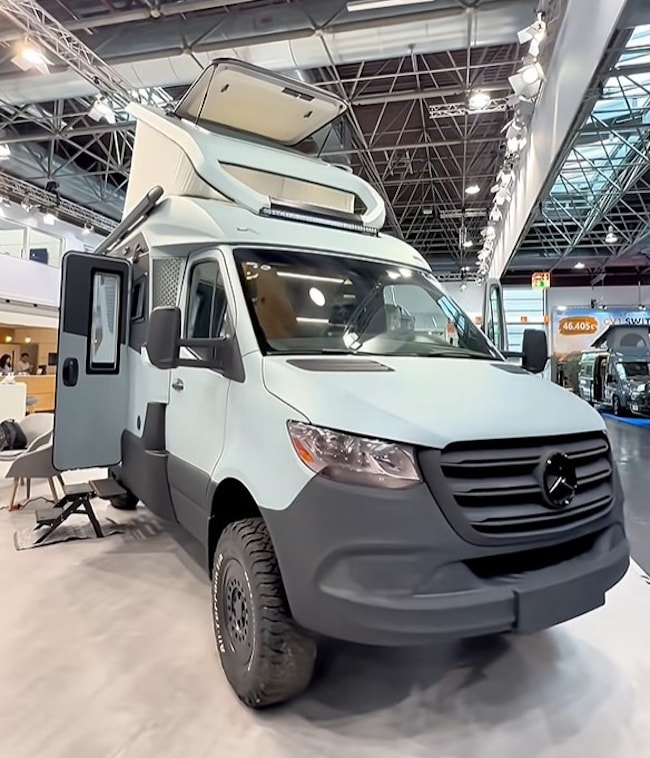
Why did the Chinese Sprinter 4x4 draw a crowd at the stand?
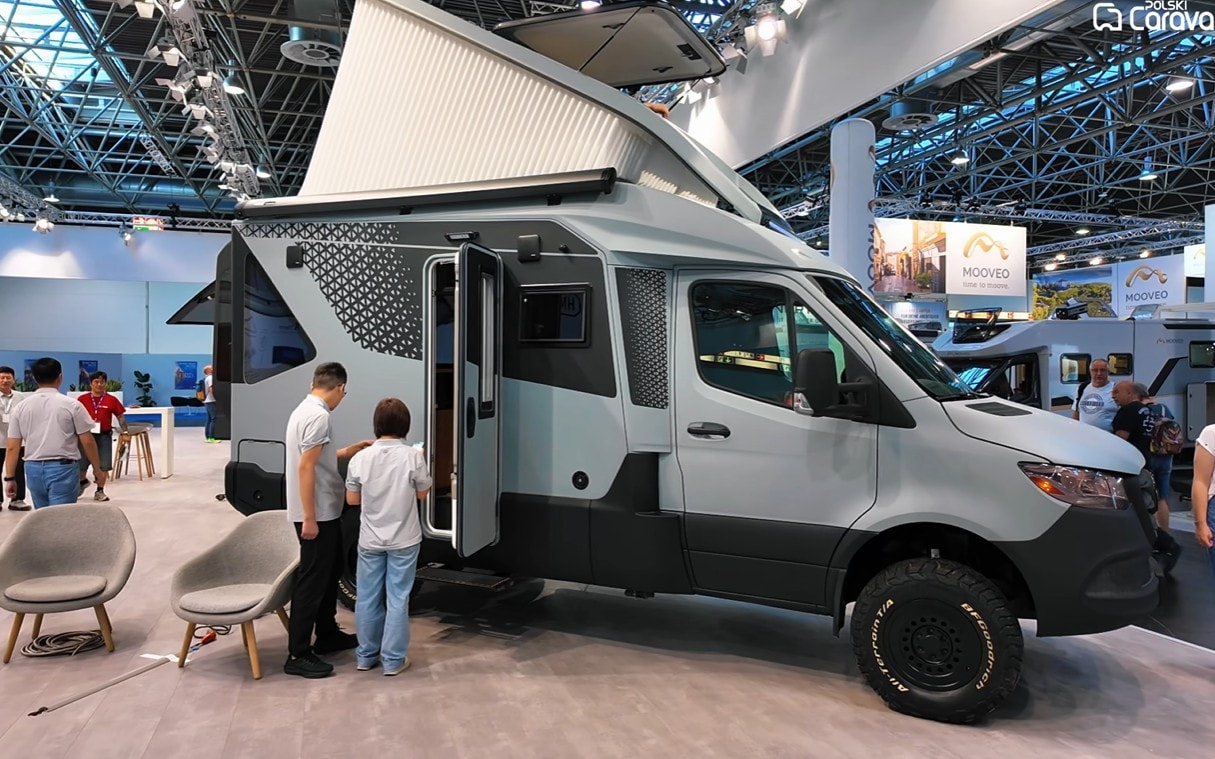
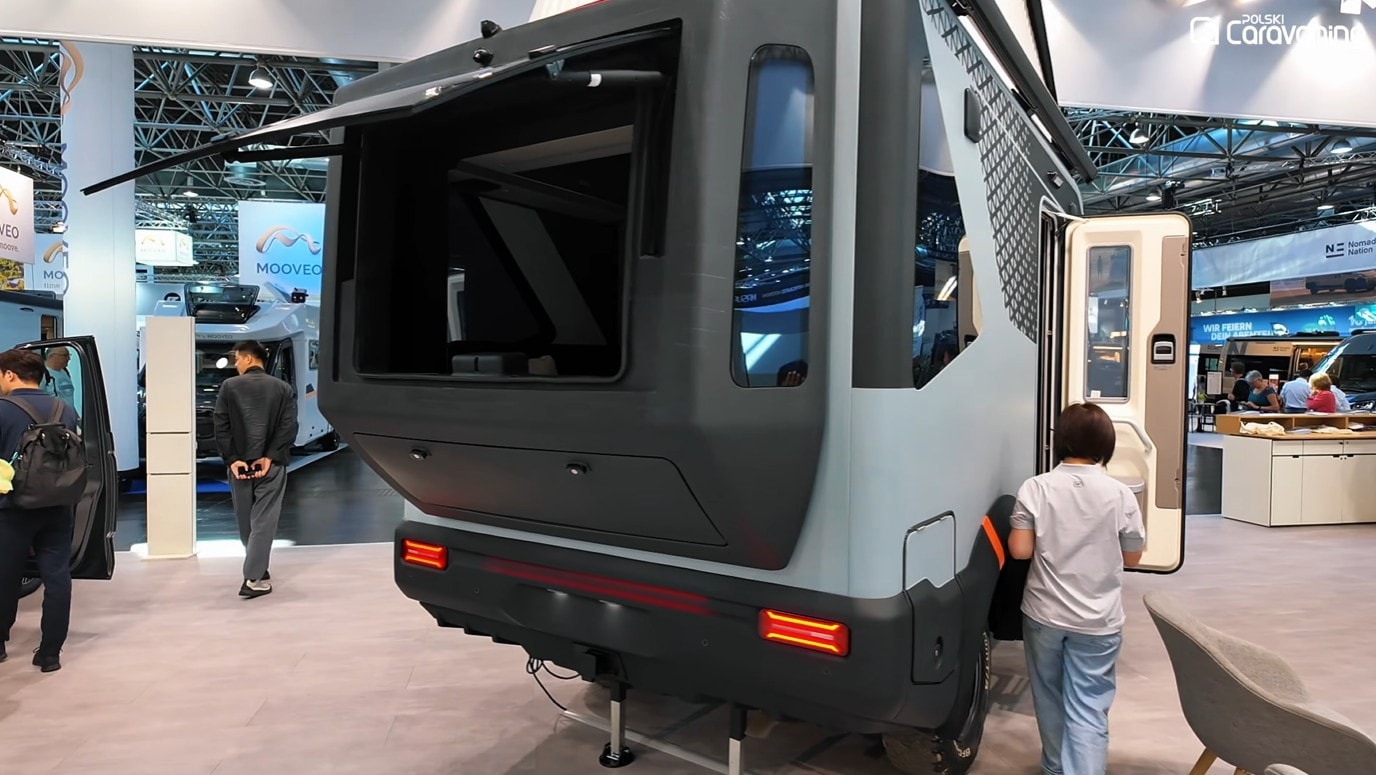
The star attraction is the Sprinter with a carbon fiber monocoque body, a pop-up roof, and an extendable rear overhang that expands the living area and opens like a giant tailgate. The dimensions and layout are surprisingly “European”: not the Chinese palace on wheels from a few years ago, but a vehicle that could fit in a Bavarian Stellplatz without looking like a spaceship. It has BFGoodrich All-Terrain tires, a raised suspension, two colors (ice grey + anthracite), and a white roof that looks like a small penthouse when open.
The roof isn't a classic canvas pop-top. HMT uses an X GLOO module: a rigid cover, 3D fabric, and pneumatic walls instead of the usual European canvas. Their stated motto: “shaping air.” It offers superior thermal and acoustic insulation compared to low-cost vanlife awnings, with front openings (one also a curtain) and, on the other Sprinter at the stand, a rear wall that opens completely. For anyone who has endured a sweltering August under a traditional pop-top, this is the kind of detail that makes you stop and look.
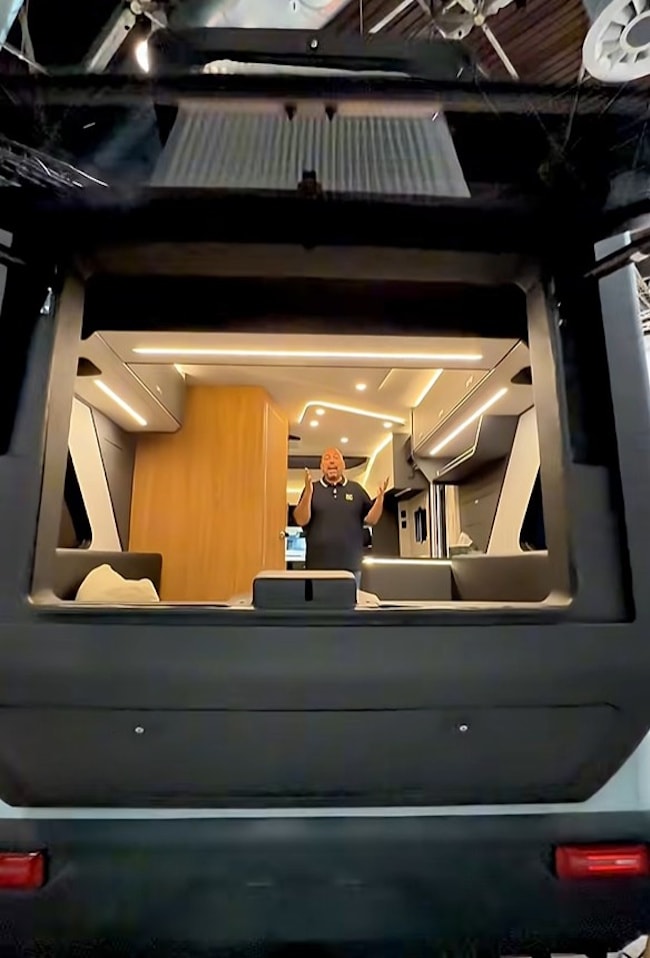
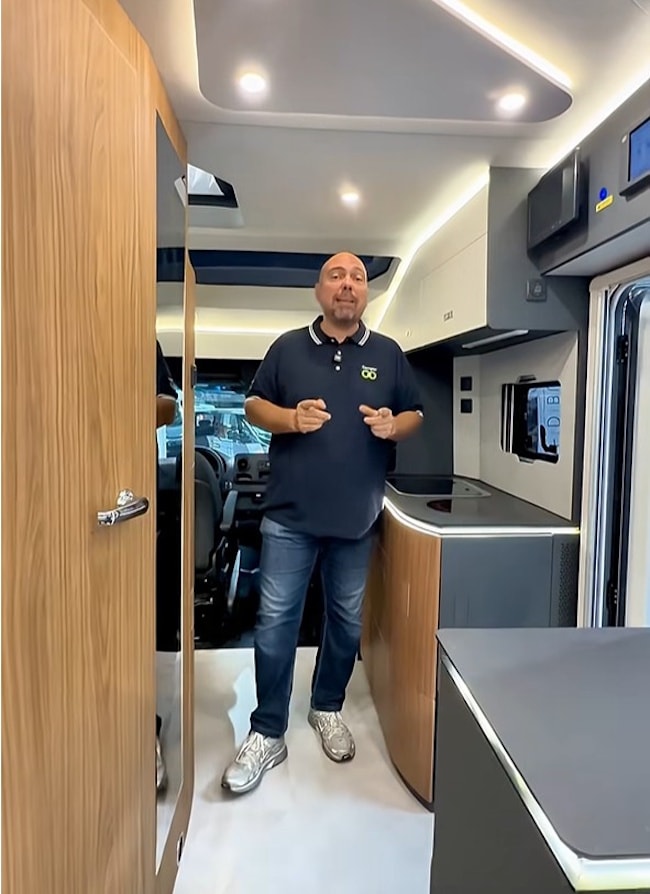
Xsani: the toilet that incinerates waste with microwaves
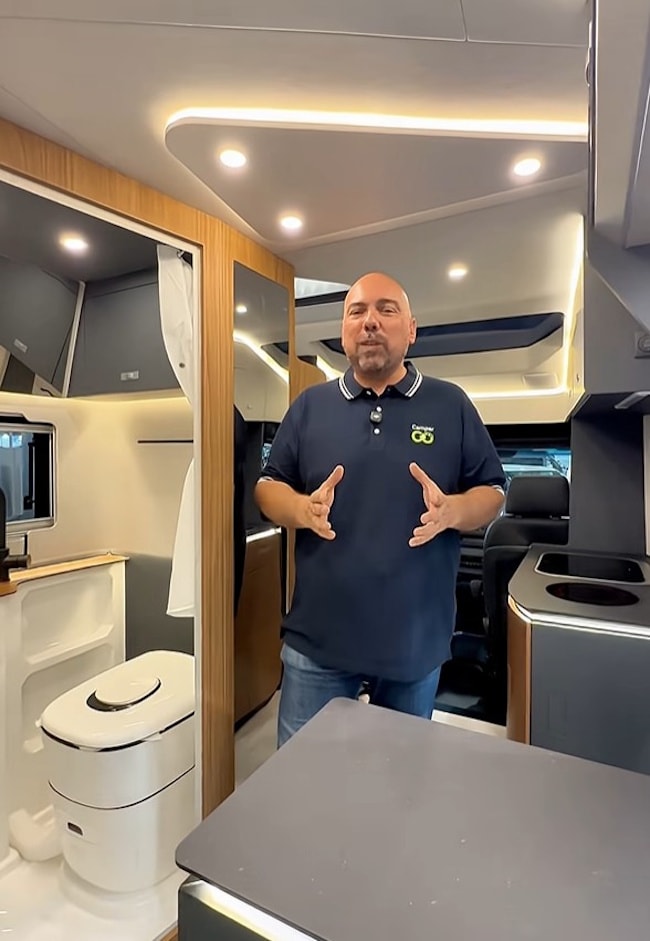
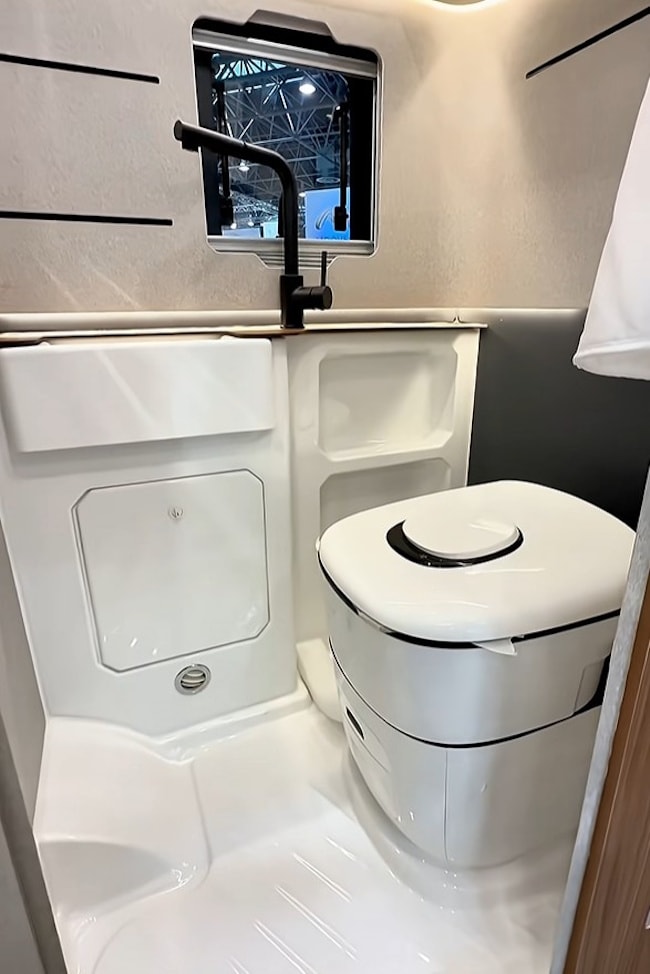
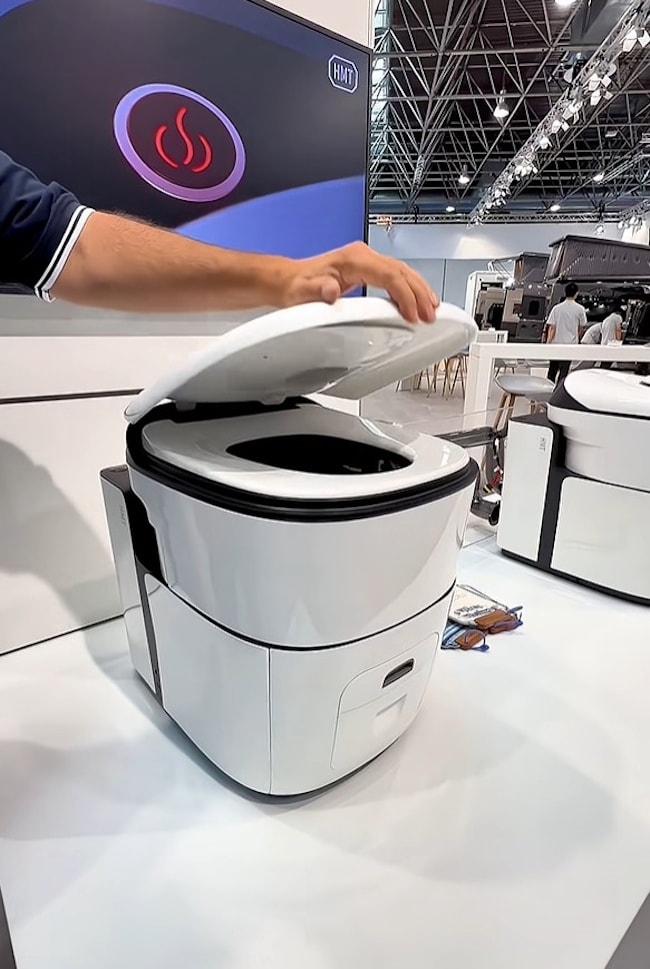
All HMT vehicles featured the same toilet: Xsani, a self-cleaning sanitary unit that incinerates waste with microwaves until it turns to ash. No cassette to empty, no American-style black tank. In Europe, the cassette is sacred, and many will wrinkle their noses; but if the technology delivers on its promise, it's one of the few trade show ideas that would truly change wild camping. It remains to be seen how homologation, power consumption, and what happens when the system breaks down 40 km from the nearest service point will work out. For now, it's a wow factor from the exhibition hall — and that's how it should be told.
Xfresh: aluminum kitchen, ice maker, and dispenser
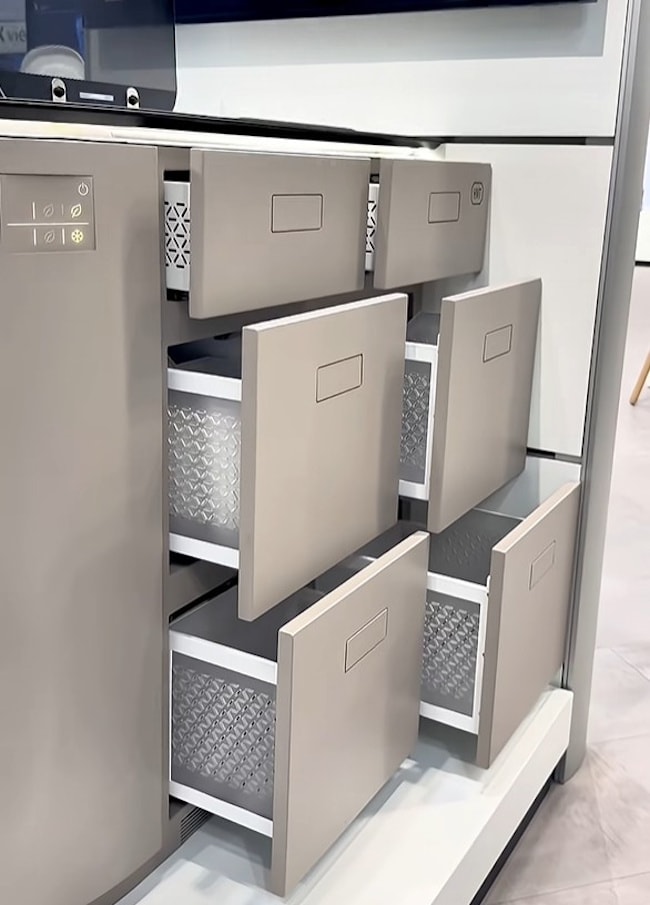
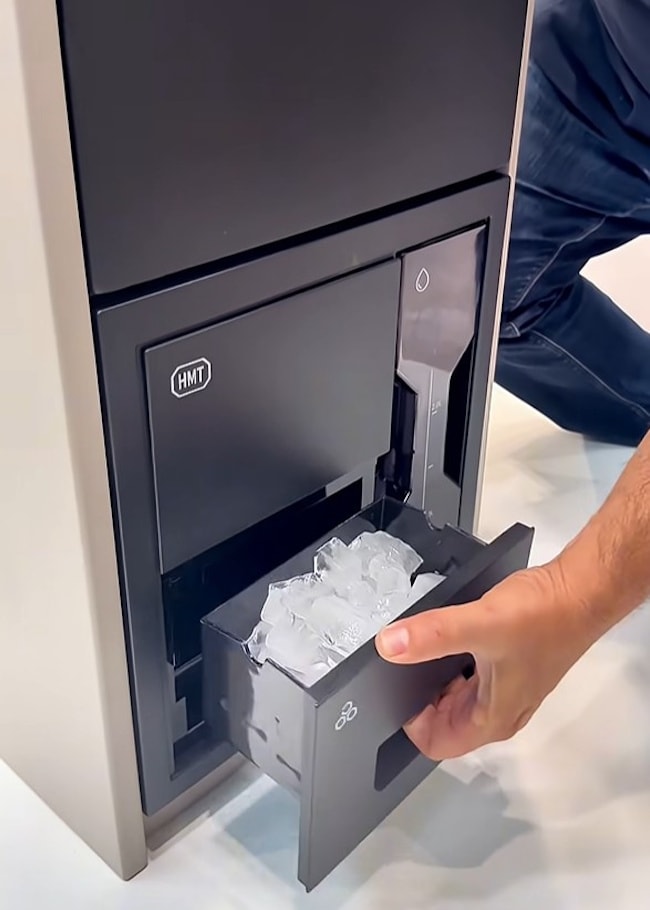
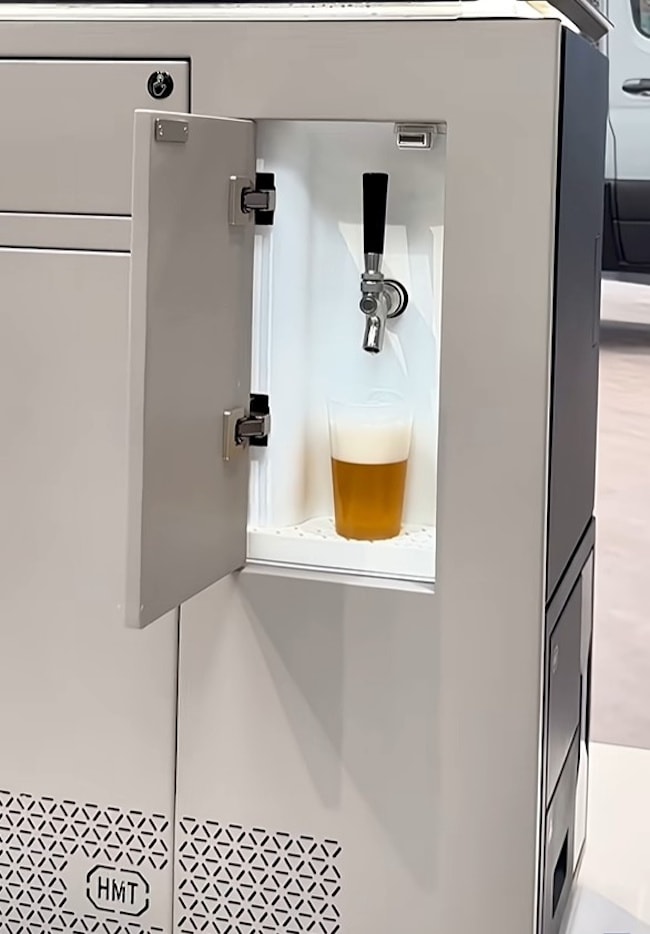
The Xfresh kitchen unit is a single piece of lightweight aluminum, with laser-cut drawer frames to save weight. Stated volume: 187 liters, including pantry, fridge, and freezer. A flush-mounted one-burner induction hob, a sink with a cover, and under the counter, the circus: an ice maker in a low drawer and, on the camping side, a retractable beer dispenser. The food fridge only opens from the inside. It's the manifesto of the contemporary Chinese camper: lots of electronics, lots of “why not?”, and an aesthetic that worked better at the show than many drab European vans.
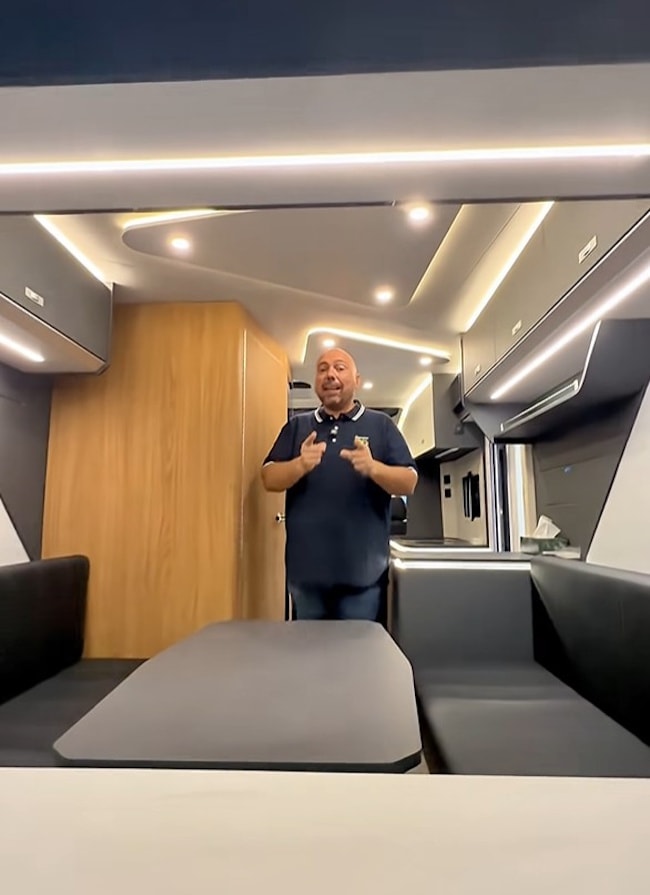
Is it worth waiting for a production Chinese 4x4 in Europe?
Yes, but with the right timeline. Those who want a 4x4 now should look elsewhere: KABE Traq, Hymer CrossOver, Atlantis Carbon, vans prepared in halls 16-17. Those who want to understand where the market is going should remember HMT. The demonstrators featured hydraulic leveling, a solar roof, and a mini-split for heating/cooling: the message is autonomy, not just overland looks. To understand if your onboard electrical system is ready for an induction cooktop and air conditioning, we have a practical guide on the blog about camper battery and electrical system.
Context: in 2024, brands like Deddle RV (imported by La Marca) had already attempted to enter Germany with production liners/alkoven models. In 2026, China chose a different strategy in Düsseldorf: fewer price lists, more laboratory. It's a signal, not a void. Anyone traveling in Germany knows that the Caravan Salon is the barometer for the following season's Stellplatz offerings: our guide to Bavaria by camper remains useful for imagining where you would take a 4x4; this extra week helps understand what vehicle you would use.
mitcamper advice
If you leave the Salon with a fever for Chinese 4x4s, keep two lists. List A: European vehicles already available for order (we'll discuss them in this week's articles). List B: technologies to monitor in 2027 (Xsani, Xfresh, carbon fiber, pneumatic roofs). Don't buy a demonstrator with your eyes closed. And if you want to compare trade show impressions with those who were actually there, the mitcamper community is made for it: families and vanlifers with similar tastes, not just highlight feeds. The full report from the show remains in our article on the Caravan Salon Düsseldorf 2026.
Sources: autoevolution and Polski Caravaning / Camper Infinity reports from Caravan Salon 2026; official CARAVAN SALON / Messe Düsseldorf website; Deddle RV / La Marca context (previous editions).