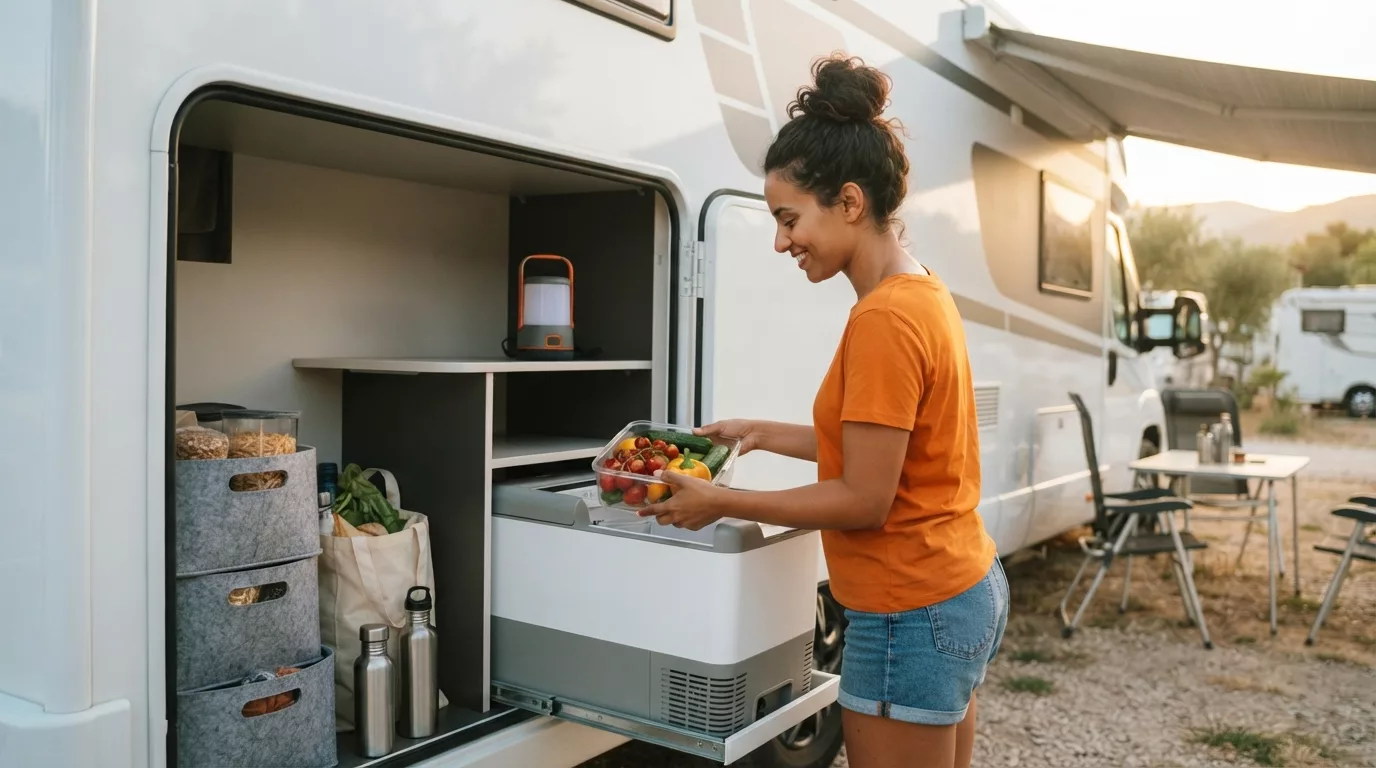
The challenge of the camper fridge during summer
Summer is the golden season for camper travelers. Long days, mild weather, and the desire to explore encourage many to set off, alone, as a couple, or with the whole family. However, keeping a full and well-organized fridge in a recreational vehicle, especially during the hottest months, presents unique challenges. Space is limited, electricity is not always guaranteed, and food preservation requires attention.
Well-planned weekly grocery shopping will not only save you frequent supermarket stops but also ensure you always have the necessary ingredients to prepare tasty and nutritious meals, reducing waste and optimizing space.
Planning: the first step to an efficient fridge
Before even thinking about what to put in your cart, it's essential to dedicate time to grocery planning. This means:
- Analyzing existing supplies: before leaving or before each trip, take stock of what you already have in your pantry and fridge. This will prevent duplicate purchases and waste.
- Consulting the weekly menu: think about the meals you plan to prepare during the week. What ingredients will you need? Do you prefer quick dishes or more elaborate recipes? Having a clear idea will help you create a targeted list. For ideas and tips on how to cook simply and quickly, even with children, you can consult our article on cooking in a camper with children.
- Considering the type of trip: will you be staying at equipped service areas with electrical hookups, or will you be more off-grid, relying on batteries and solar panels? This will influence your choice of fresh foods that require constant refrigeration.
- Checking the refrigerator's condition: ensure your three-way (or compressor) refrigerator is functioning correctly. A preventive check, perhaps dedicated to the safety of gas and the three-way refrigerator, is always a good idea before heading off on vacation.
Smart grocery shopping: what to buy and how
Once the list is made, it's time to head to the supermarket or local market. Here are some practical tips:
Optimizing fridge space
The camper's refrigerator, however well-designed, has limited dimensions. Organization is key:
- Fresh produce: fruits, vegetables, and dairy products should occupy the central spaces where the temperature is most stable. Use stackable containers to maximize vertical space.
- Cold cuts and cheeses: prefer vacuum-sealed packages or use airtight containers to preserve freshness and prevent odor contamination.
- Beverages: bottles can be stored upright or, if possible, laid down in designated compartments. Consider buying plastic bottles or cans, which are lighter and less fragile than glass.
- Freezer: if you have a freezer compartment, use it to freeze small pre-prepared meals or to store meat and fish.
Long-lasting foods: your allies
To reduce reliance on the fridge and always have something available, focus on long-lasting foods:
- Canned goods: tuna, legumes, peeled tomatoes, corn, canned beans are versatile and nutritious.
- Pasta, rice, couscous: essential carbohydrates that keep well and require little preparation.
- Oil, vinegar, salt, spices: essential seasonings to flavor your dishes.
- Snacks: cookies, crackers, dried fruit, energy bars are perfect for a quick snack.
- Coffee, tea, sugar: to start the day with the right energy.
Fresh products: how to choose and store them
Even with limited space, don't give up on freshness:
- Vegetables and fruits: choose seasonal produce that keeps well, such as apples, pears, carrots, potatoes, onions. Wash and thoroughly dry fruits and vegetables before storing them in the fridge or in a cool, well-ventilated place.
- Dairy products: UHT or long-life milk, yogurt, aged cheeses that require less refrigeration.
- Meat and fish: buy only the quantities needed for the first few days and store them in airtight containers. Consider buying pre-cooked or smoked products that have a longer shelf life.
Internal organization: the secret to a tidy fridge
A messy fridge leads to forgotten food and consequent waste. Here's how to organize it best:
- Dedicated zones: assign a specific space for each type of food (e.g., a shelf for dairy, a drawer for vegetables).
- Containers: use transparent, stackable containers to group foods and make the most of the space.
- Labeling: if you prepare meals in advance or freeze portions, label them with the date and contents.
- Rotation: apply the FIFO (First-In, First-Out) principle: products bought first should be consumed first. Place new purchases behind existing ones.
Cold and energy management
In summer, maintaining the ideal temperature in the fridge is crucial but can impact energy consumption. Here are some tips:
- Avoid prolonged openings: open the fridge only when necessary and close it quickly.
- Do not insert hot food: let food cool down before putting it in the fridge.
- Positioning: ensure the camper is parked in a shaded spot, if possible.
- Check ventilation: for three-way refrigerators, it's essential that the external ventilation grilles are free from obstructions.
- Energy management: if you are traveling without an electrical hookup, monitor battery consumption. It might be useful to read our in-depth article on how to save on electricity.
Extra tips for summer camper grocery shopping
Remember that groceries are not just food:
- Water: essential in summer. Ensure you have adequate supplies and know where to refill. Sanitizing the water tank before summer is a crucial step.
- Toiletries: soap, shampoo, toothpaste, but also cleaning products for the vehicle.
- Travel pharmacy: don't forget a well-stocked first-aid kit, especially if traveling with children. Consult our complete guide to the travel pharmacy.
- Cleaning supplies: detergents, sponges, cloths to keep the camper clean.
Frequently asked question: how to avoid bad smells from the fridge in summer?
Bad smells from the refrigerator in summer are a common problem. The main cause is often a lack of hygiene or improper storage of certain foods. To avoid them:
- Regularly clean the fridge with specific products or natural solutions like water and vinegar.
- Do not leave spoiled or opened food for too long.
- Use airtight containers for all foods, especially cheeses and cold cuts.
- Ventilate the fridge when possible, perhaps during a prolonged stop.
- Ensure the condensate drain system is clean and unobstructed.
Frequently asked question: what are the best foods to buy to reduce weight and bulk?
For camper travelers, reducing weight and bulk is always a priority. Prioritize:
- Freeze-dried or dehydrated foods: soups, complete meals, fruits. They are lightweight and only require adding hot water.
- Powdered products: powdered milk, powdered fruit juices.
- Canned goods: less bulky and lighter than glass.
- Pasta and rice: easily transportable and versatile.
- Individually packaged snacks: practical and easy to manage.
Avoid, as much as possible, products with a lot of liquid or bulky, heavy packaging.
mitcamper advice
Organizing weekly groceries in a camper is an art that is refined with experience. Sharing tips and tricks with other travelers can make this task simpler and more enjoyable. On mitcamper, you can find people with whom to exchange ideas and discover new strategies to make the most of your road adventure.