
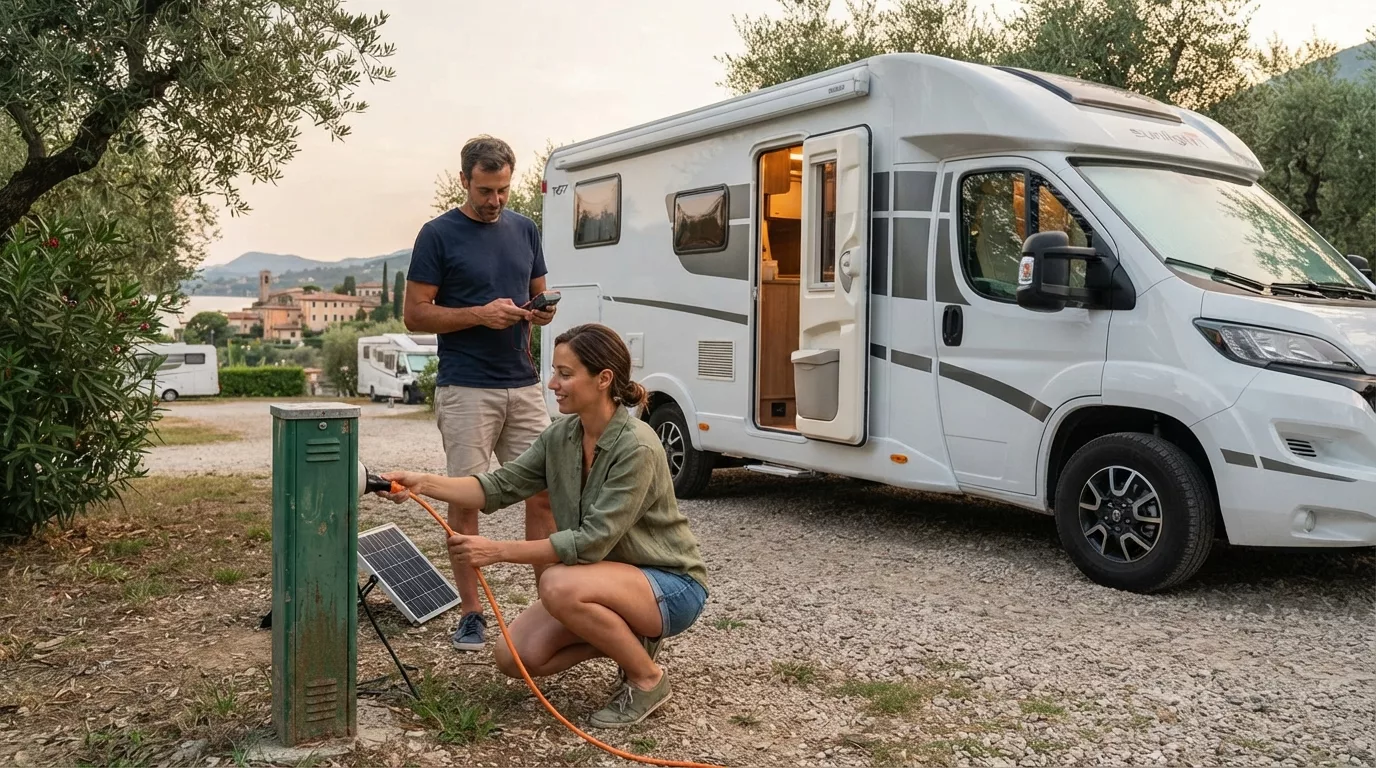
Saving electricity at rest stops: summer tricks
Traveling by camper during the summer months offers an invaluable experience: the flexibility to choose where to stop, direct contact with nature, and the opportunity to create unforgettable memories. However, for those who live on the road or spend long holidays with their vehicle, managing energy resources, particularly electricity, becomes a crucial aspect. Rest stops, often lacking direct connections to the electrical grid, push us to become more aware of our consumption and find smart solutions to maximize autonomy. This article is dedicated to all camper enthusiasts who wish to combine the pleasure of travel with careful economy, offering practical strategies to reduce electricity consumption during summer stops.
The importance of conscious energy management
In summer, days get longer and outdoor activities multiply, but with them, our camper's energy needs also increase. A constantly running refrigerator, air circulation fans, electronic devices to recharge, evening lighting, and for some, even air conditioning: all of this puts a strain on our batteries and, consequently, on our autonomy. Conscious energy management not only allows us to save on electricity but also contributes to a more sustainable use of resources, a value increasingly important for the camper community.
Before diving into specific tricks, it's essential to understand the heart of a camper's electrical system: the service batteries. These are the true protagonists of autonomy when we are not connected to the electrical grid. Keeping the batteries in excellent condition and optimizing their use is the first step towards a serene, low-consumption summer.
Battery maintenance: the foundation for autonomy
Service batteries, whether lead-acid, AGM, or lithium, require proper care to ensure optimal performance. Periodic checks of their charge status and, for lead-acid batteries, the electrolyte level (if accessible), can prevent future problems. Furthermore, it's useful to verify that the connections are clean and secure, avoiding current leaks.
Practical strategies to reduce consumption at rest stops
Once a good foundation is secured with battery maintenance, we can focus on daily habits and smart appliance usage. The goal is to minimize energy demand when it's not strictly necessary, making the most of sunny hours for solar charging (if available) or planning strategic stops to recharge batteries via the alternator or generators (used sparingly).
1. Optimize refrigerator use
The refrigerator is one of the appliances that consumes the most energy in a camper. In summer, with high external temperatures, its work intensifies. Here are some tips to make it more efficient:
- Positioning: Ensure the camper is positioned so as not to expose the refrigerator to direct sunlight. If possible, park in the shade.
- Ventilation: The refrigerator's external ventilation grilles must always be free of obstructions to allow proper heat dissipation.
- Filling: A full refrigerator works more efficiently than a half-empty one, as cold food helps maintain the temperature. However, avoid overfilling it in a way that blocks air circulation.
- Temperature: Set the internal temperature to the necessary level, avoiding excessive cooling. Each degree less increases consumption.
- Openings: Limit the number of times you open the refrigerator and close it quickly. Plan what you need before opening it.
- Power mode: If your refrigerator has multiple power modes (battery, gas, mains), choose the most efficient one based on the situation. At a rest stop, gas mode is often the most economical if you have full cylinders.
2. Smart, low-consumption lighting
Lighting is another element to consider. Old incandescent bulbs consume much more energy than modern LED lights. If your camper is still equipped with traditional bulbs, it's an excellent investment to replace them with LEDs.
- Prioritize LEDs: If not already present, consider replacing all interior and exterior lights with LED models. The energy savings are significant, as is their lifespan.
- Conscious use: Turn off lights when they are not needed. Make the most of natural light during the day.
- Outdoor lighting: Use outdoor lights only when strictly necessary, for example, for maneuvering operations or to create a welcoming evening ambiance, but without overdoing it.
3. Managing electronic devices and appliances
In the digital age, smartphones, tablets, laptops, and other devices have become indispensable travel companions. Their charging, as well as the use of other small appliances, can impact consumption.
- Efficient chargers: Use good quality chargers and, if possible, the original ones for your devices. Avoid leaving chargers plugged in when not in use, as they continue to consume a small amount of energy (stand-by).
- Fans and air conditioners: In summer, heat can be a problem. If you don't have an air conditioner, fans consume much less energy. Choose low-consumption models and use them strategically to create airflow. If you use air conditioning, do so sparingly and only when strictly necessary, perhaps taking advantage of the cooler hours of the evening or morning.
- Low-consumption appliances: When purchasing new appliances for your camper (e.g., kettle, toaster, coffee maker), opt for models with a good energy efficiency class.
- Solar panels: If your camper is equipped with solar panels, ensure they are clean and positioned to capture maximum sunlight. This is the most ecological and economical way to recharge your service batteries.
4. Making the most of sunlight and external resources
Rest stops offer various possibilities, some more convenient than others. The key is to know how to exploit them best.
- Solar charging: As mentioned, solar panels are an investment that pays for itself over time. During the day, let the sun do its work to recharge the batteries.
- Alternator: During camper transfers, the engine's alternator recharges the service batteries. Take advantage of these moments to get a good charge.
- Generators: The use of generators should be a last resort, due to noise and consumption. If necessary, use them for short periods and only for essential operations (e.g., quick battery charging). Check the rules of the rest stops regarding generator use.
- Shaded spots: Parking the camper in the shade not only helps keep the interior cooler, reducing the need for air conditioning, but also protects heat-sensitive appliances.
mitcamper tips for a summer of savings
Traveling by camper is also an opportunity to connect with other enthusiasts and share experiences. Rest stops, rallies, and online forums are ideal places to exchange practical advice and discover new strategies for living the road life to the fullest. On mitcamper, you can find people with passions similar to yours, creating authentic bonds and discovering a more conscious and shared way of experiencing camper life. You might find that another camper has an ingenious solution for energy management you hadn't considered, or that simply sharing an experience can lead to new ideas.