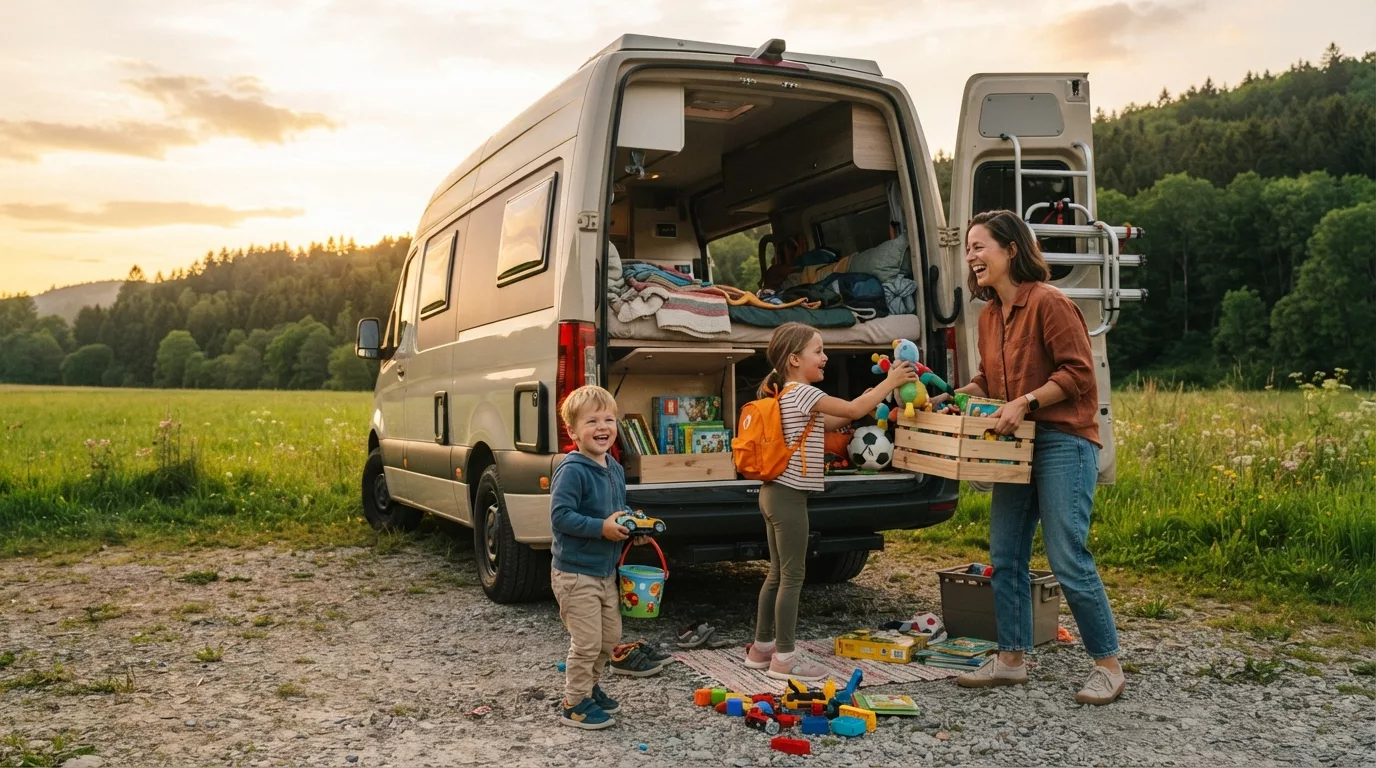
Preparing for the first camper trip with little ones
The idea of exploring new horizons on four wheels with the whole family is exciting. However, when young children are involved, enthusiasm can mix with a healthy dose of concern. The first camper trip with small children requires careful planning, but it shouldn't turn into an organizational nightmare. On the contrary, it can be the start of a series of adventures that will strengthen family bonds and create precious memories.
The key is preparation. Thinking about every detail, from clothing to games, from safety to food, can make the difference between a stressful experience and a serene holiday. This article is designed to guide you step by step, offering practical advice and proven strategies to make your debut in the world of campervanning a success.
Organization: the foundation for a peaceful trip
Even before leaving, organization is fundamental. It's not just about packing, but about thinking about logistics, safety, and the comfort of the little ones.
What to pack: the essential list
When traveling with children, space in the camper is precious. It's important to be strategic about what to bring:
- Layered clothing: The weather can change quickly. Dressing children in layers allows for easy adaptation to temperature variations. Don't forget waterproof items and suitable footwear.
- Comprehensive first-aid kit: In addition to basic medications, include everything needed for minor household accidents or typical childhood ailments. Consult our article on the travel pharmacy for camper families.
- Games and entertainment: Books, coloring supplies, travel games, and tablets with downloaded movies can be lifesavers during moments of boredom or while traveling. Discover ideas for games and entertainment for children on the road.
- Specific equipment: If necessary, bring lightweight strollers, baby carriers, and camper-approved car seats.
- Bedding and blankets: Having enough changes of clothes and comfortable blankets on hand is always a good idea.
Onboard safety: absolute priority
Children's safety in a camper is non-negotiable. Ensure that:
- Car seats are correctly installed and approved for use in campers.
- All seat belts are used while driving, by both children and adults.
- Doors and windows have locking systems to prevent accidental opening.
- Heavy items are securely fastened to avoid hazards in case of sudden braking.
To learn more, read our article on camper safety: belts, car seats, and regulations.
Life on the road with little ones: practical tips
Once you're on the road, managing daily life requires flexibility and patience. Here are some tips for making life on the road with young children as smooth as possible.
Managing travel
Young children need frequent breaks. Plan regular stops to allow them to move, play, and eat. Avoid driving for too many consecutive hours. Consider traveling during the children's sleep times, if possible.
Food and hydration
Keeping healthy snacks and drinks within reach is essential. Organize meals simply, favoring quick recipes that don't require too many ingredients or complex preparations. A good example are the recipes discussed in our article on cooking in a camper with children.
Sleep and rest
Creating an evening routine similar to the one at home can help children settle in. Ensure the sleeping area is comfortable and cool, using blackout curtains and fans if necessary. The evening routine in a camper is an important topic to address.
Hygiene and cleanliness
Keeping the camper clean may seem challenging, but it's essential for everyone's well-being. Organize to wash clothes frequently, taking advantage of stops at equipped areas or campsites. You can find useful tips on how to wash clothes while traveling.
Where to stop: family-friendly areas and campsites
Choosing where to stop for the night or for a longer break is crucial when traveling with children. Service areas often offer open spaces where little ones can run around, while campsites provide additional amenities like swimming pools, playgrounds, and entertainment.
Service areas: freedom and simplicity
Service areas are ideal for greater autonomy. Many have green spaces, playgrounds, and are close to points of interest. It's important to know how to choose the most suitable ones, carefully reading reviews and checking for essential services.
Campsites: comfort and services
Campsites offer a higher level of comfort, with facilities like full bathrooms, hot showers (a real luxury in a camper!), and often activities dedicated to children. The choice between service areas and campsites depends on the needs of the moment and the type of holiday you want. Learn more about the difference in our article: service areas vs campsites.
Facing common challenges
Every trip has its challenges, but with a positive approach and some adjustments, even the most complex situations can be managed successfully.
Managing heat and cold
The temperature inside the camper can vary significantly. Investing in a good ventilation system or a portable air conditioner can make a big difference, especially during summer nights. Even simple measures like using blackout curtains and mosquito nets can improve comfort. For specific advice, consult our article on air conditioning and ventilation in campers.
Handling the unexpected
Having a Plan B is always useful. Whether it's a mechanical breakdown, a sudden change of plans, or a minor injury, calmness and adaptability are essential. Knowing where to find assistance or how to solve small problems can reduce stress.
mitcamper tip
The first camper trip with children is a unique opportunity to connect with nature and with each other. Don't be afraid to ask other travelers for advice or to share your experiences. On mitcamper, you can find people with similar passions, ready to exchange ideas and suggestions to make every adventure even more special.