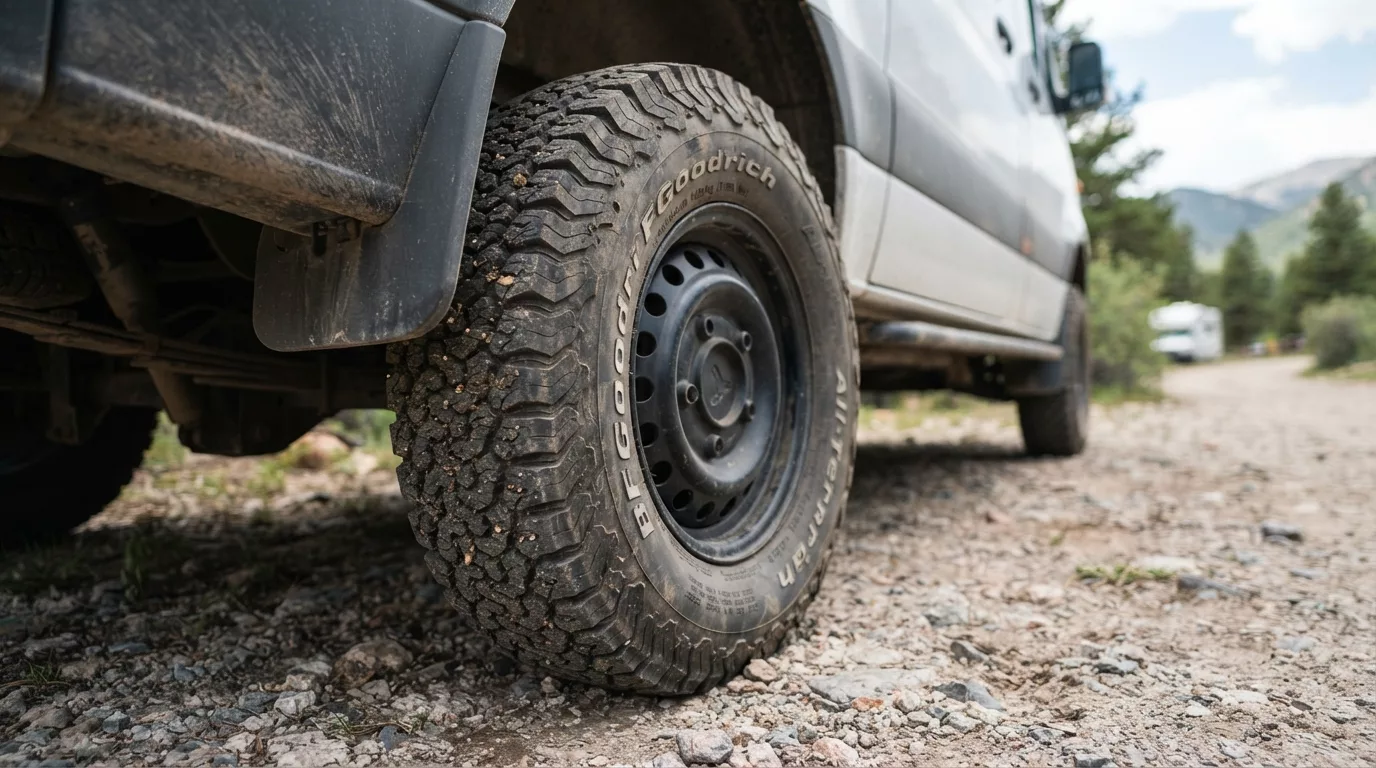
When embarking on a new road adventure with your camper, the excitement is palpable. Whether it's a weekend getaway or a long journey to discover new horizons, the sense of freedom that camper life offers is priceless. However, before starting the engine and setting off, it's essential to pay attention to a crucial aspect for the safety and reliability of your vehicle: the tires. Tires are, quite literally, the only point of contact between our vehicle and the asphalt, and their condition directly affects road handling, fuel consumption, and, above all, our safety and that of our travel companions.
In this in-depth guide, we will explore how to perform a complete check of your camper's tires, focusing on three fundamental aspects: pressure, wear, and production dates. Careful and regular maintenance of these components is an investment in the peace of mind for every trip.
The importance of camper tire pressure
Correct tire pressure is perhaps the most critical and, at the same time, the easiest element to check. Inadequate pressure can lead to a series of problems:
- Too low pressure: Increases friction with the road, causing the tire to overheat, which can lead to structural failure and, in the worst cases, sudden bursting. It also worsens road handling, increases fuel consumption, and causes uneven tread wear, concentrated on the outer edges.
- Too high pressure: Reduces the contact area with the asphalt, compromising grip, especially during braking and cornering. It increases the vehicle's rigidity, making the ride less comfortable and more prone to jolts on uneven surfaces. It also causes excessive wear in the center of the tread.
How to check tire pressure
Tire pressure should be checked when the tires are cold, meaning before you start driving or after driving only a few kilometers. You will need a good quality pressure gauge. The recommended pressure from the camper manufacturer, specific for the front and rear axles, is usually found on a sticker located:
- On the driver's or passenger's door.
- On the door's central pillar.
- In the driver's cabin, near the steering wheel.
- In the vehicle's owner's manual.
It is crucial to adhere to the indicated values, which take into account the camper's weight when fully loaded. Remember that the rear tires of a camper, especially if equipped with a garage or significant rear cargo, bear more weight than the front tires. Therefore, the recommended pressure for the rear axle will almost always be higher than that for the front axle. If your camper has dual rear wheels, you will need to check the pressure of both tires.
Checking frequency: Tire pressure should be checked at least once a month and always before embarking on a long journey. A quick check before each departure is a good habit.
Tread wear: a safety indicator
The tread is the part of the tire that ensures grip on the road. Its thickness gradually decreases with use, but it's important that the wear is uniform and that the minimum safety thickness is always guaranteed.
How to assess tread wear
The law mandates a minimum tread depth of 1.6 millimeters. However, to ensure good grip, especially in wet conditions, it is advisable to replace tires when the tread depth drops below 3 millimeters.
Most tires have wear indicators (TWI - Tread Wear Indicator). These are small rubber tabs or bridges located in the main tread grooves. When the tread reaches the level of these indicators, it means the tire has reached its wear limit and must be replaced.
In addition to overall thickness, it is crucial to observe the uniformity of wear:
- Center wear: Indicates over-inflation.
- Edge wear: Indicates under-inflation.
- Wear on one side only (inner or outer): May indicate problems with wheel alignment (toe or camber) or abnormal wear due to a misaligned rim. In this case, it is advisable to consult a tire specialist for a wheel alignment check.
- Spotty or irregular wear: Can be a symptom of tire imbalances or structural problems.
Unevenly worn tread seriously compromises safety, reducing grip and increasing the risk of aquaplaning.
Tire production dates: an often-overlooked aspect
Many RV enthusiasts pay attention to pressure and visible wear, but often overlook another factor crucial for safety: the age of the tire. Rubber, in fact, is a material that degrades over time, regardless of tread wear. Exposure to UV rays, temperature fluctuations, humidity, and mechanical stress lead to hardening and loss of elasticity, which can compromise the tire's structural integrity.
How to read the DOT (Department of Transportation)
The production date of a tire is indicated on the sidewall within an alphanumeric code called DOT. The last part of this code is what interests us:
- The last two digits indicate the year of production. For example, "2321" means the tire was produced in the 23rd week of 2021.
- The two preceding digits indicate the week of production within that year.
Therefore, a tire with DOT code "ABCD1522" was produced in the 15th week of 2022.
When to replace tires by age
Even if the tread appears to be in good condition, tires should be replaced after a certain period. The general recommendation from most manufacturers and safety experts is to replace tires after 5-6 years from the production date, even if they haven't reached the legal wear limit. For campers, which often remain stationary for long periods or travel few kilometers per year, this aspect becomes even more relevant. An old tire, even with deep tread, can have subtle cracks on the sidewalls or excessive stiffness that make it dangerous.
It is therefore essential to regularly check the DOT of your camper's tires, especially if you have purchased a used vehicle or are unsure about the age of the tires fitted. Do not hesitate to ask your trusted tire specialist to check the age of the tires during periodic inspections.
Additional checks and practical tips
Besides the three fundamental pillars (pressure, wear, date), there are other aspects to consider for comprehensive camper tire maintenance:
- Visual inspection of sidewalls: Check for cuts, cracks, bulges, or any other signs of damage on the tire sidewalls. A bulge is a sign of internal failure and requires immediate tire replacement.
- Valves and caps: Ensure the valves are in good condition and that the caps are screwed on tightly to prevent air leaks.
- Spare tire: Don't forget to check the pressure and condition of the spare tire as well. Make sure it is securely fastened and accessible in case of need.
- Winter/summer tires: If you use seasonal tires, remember to switch them at the appropriate times and check their condition.
- Storage: If the camper remains stationary for long periods, it is advisable to slightly overinflate the tires and, if possible, raise it on jacks to take the weight off the tires themselves.
Camper tire maintenance is not a complex operation, but it requires attention and regularity. Dedicating a few minutes to these checks before each departure can make a big difference in terms of safety and peace of mind during your trip. Remember that your safety and that of your loved ones also depend on these details.
mitcamper tip
Sharing experiences and advice among RV enthusiasts is one of the pillars of the community. On mitcamper, you can connect with people who share your passion for road trips and camper life. You might find compatible travel companions, exchange valuable tips on vehicle maintenance, or simply share your next destinations. Explore the connection possibilities and discover a world of people ready to experience the road with you.